User Documentation for cPanel
User Documentation for cPanel
As a hosting provider, you’re no stranger to the flood of support tickets that hit your inbox daily.
“How do I set up my email?” “Why isn’t my website loading?” “How do I install WordPress?”
Sound familiar? These repetitive questions can eat up your team’s time and energy, pulling focus from growing your business.
A WHMCS knowledge base gives clients a self-service place to find instructions for routine hosting tasks before opening a support ticket. It does not replace direct support, but it can reduce repetitive how-to requests and give support staff more time for account-specific or technical issues.
RSH Web Services offers pre-made WHMCS knowledge base articles covering cPanel, WordPress, FTP and Softaculous. This guide explains which repetitive questions are good candidates for self-service documentation, when a support ticket is still appropriate, and how hosting providers can turn recurring questions into useful WHMCS articles.
WHMCS includes a knowledge base that hosting providers can use to publish support articles for clients. When common tasks are documented clearly, customers can consult those instructions at any time and decide whether they can complete the task themselves or need direct assistance.
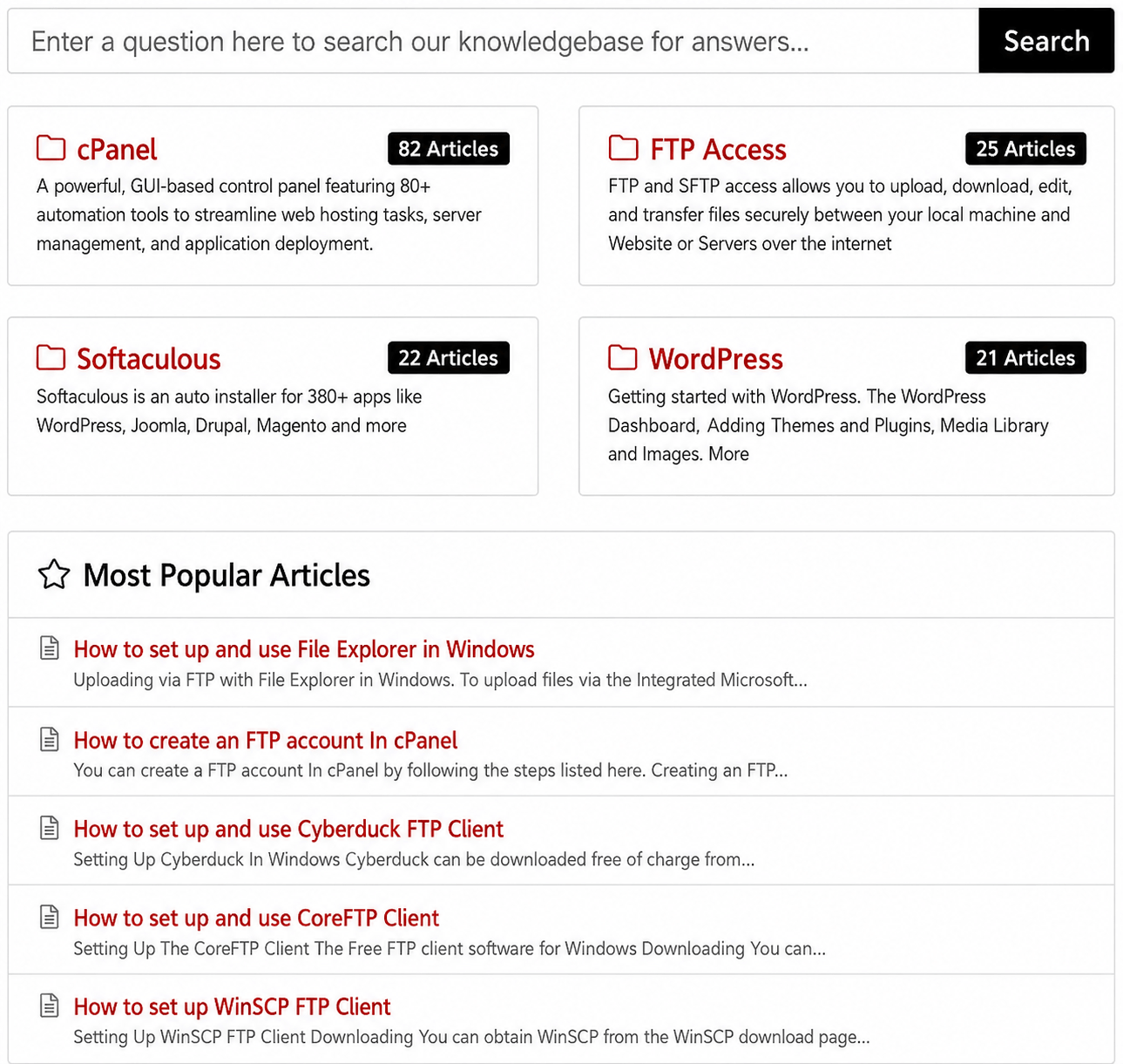
The current RSH Web Services package contains 150 ready-to-use support articles. The imported articles can be edited in WHMCS so providers can adapt the wording and instructions to their own hosting environment.
| Article Category | Number of Articles |
|---|---|
| cPanel tutorials | 82 |
| WordPress tutorials | 21 |
| FTP tutorials | 25 |
| Softaculous tutorials | 22 |
| Total | 150 |
By offering instant answers, our knowledge base empowers clients to solve issues themselves, reducing the load on your support team. And with pre-made articles, you can have this system up and running in no time.
The best candidates for self-service documentation are repeatable tasks that can be explained safely with consistent steps. Examples include:
A knowledge base is less suitable as the only response to account-specific errors, billing questions, server-side failures, suspected security incidents or problems that require administrator access. Those situations may require direct support even when a related article provides useful background.
| Common Support Problem | Knowledge Base Approach | Practical Outcome |
|---|---|---|
| Repeated setup questions | Publish task-focused step-by-step tutorials | Customers can check the documented procedure before opening a ticket |
| Email configuration questions | Provide cPanel email guides | Routine email tasks have a consistent self-service reference |
| WordPress installation questions | Provide WordPress installation instructions | Customers have an immediate procedure to follow |
| FTP and file-transfer questions | Provide FTP and file-management guides | Common transfer tasks can be handled with documented steps |
| Softaculous questions | Document supported application-installation workflows | Customers can follow the same approved procedure |
| Outdated or unclear instructions | Review articles when interfaces or services change | Customers receive guidance that better matches the current environment |
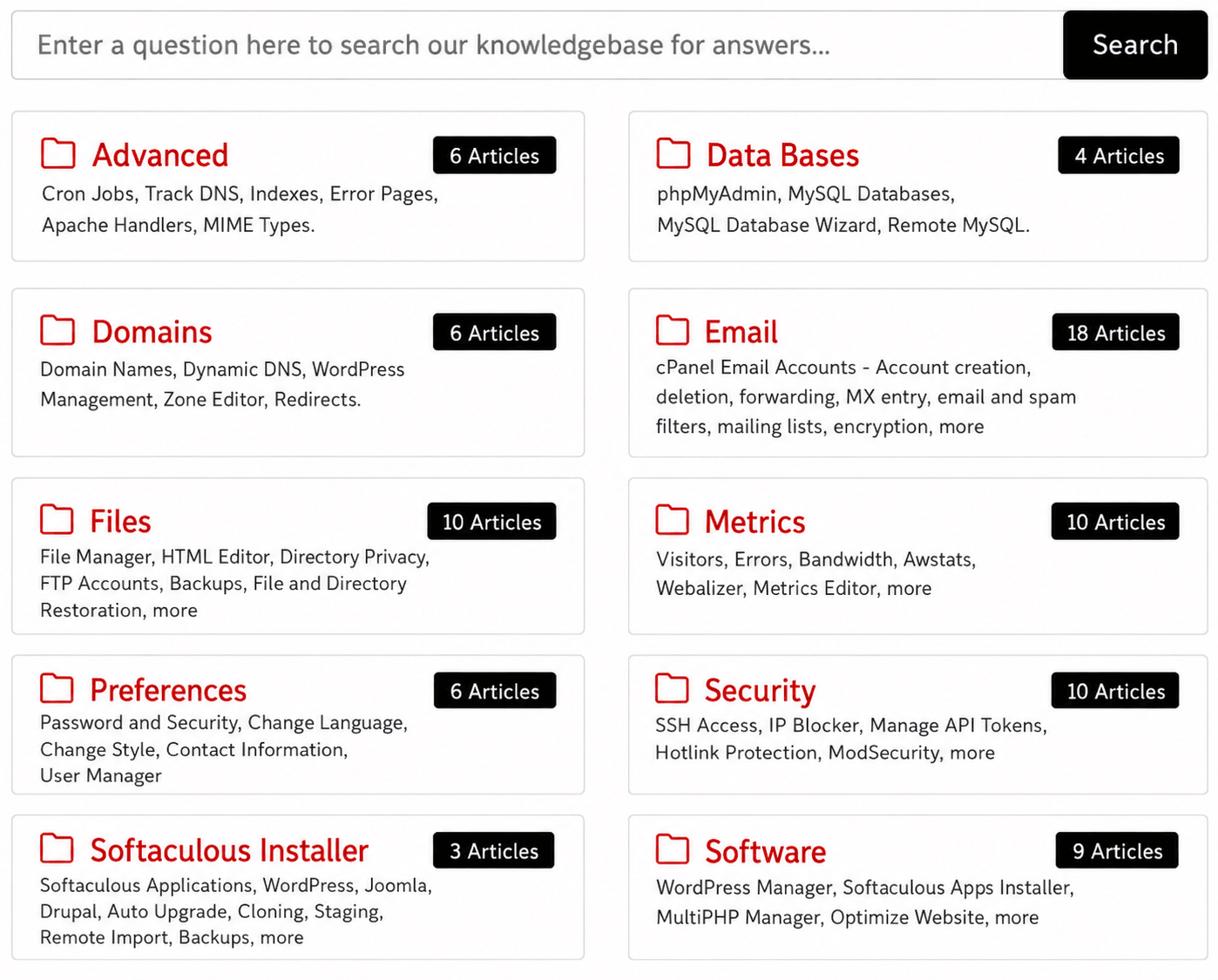
Creating a knowledge base from the ground up can feel overwhelming, especially when you’re juggling server updates and client requests.
Pre-made WHMCS knowledge base articles provide a starting library that can be reviewed and customized instead of requiring every common support tutorial to be written from scratch.
Pre-made documentation can shorten the initial content-building process, while provider review and ongoing maintenance remain important for accurate customer support.
Self-service works best when the procedure is repeatable and does not depend on private account details or administrator intervention.
| Situation | Knowledge Base | Support Ticket |
|---|---|---|
| Routine how-to question | Good starting point | May be unnecessary if the article resolves the task |
| Standard cPanel task | Good starting point | Useful if the documented steps fail or do not match the account |
| General WordPress setup | Useful for documented procedures | May be needed for account-specific errors |
| Account-specific error | May provide background or troubleshooting steps | Often appropriate |
| Billing or account question | Limited to general policies or instructions | Appropriate for account-specific help |
| Server-side problem | May explain symptoms or basic checks | Appropriate when provider action is required |
| Security incident | Can provide general safety guidance | Direct support is appropriate for account-specific investigation or action |
A simple ticket-to-article workflow helps a knowledge base grow around real customer needs:
Before installing the addon, back up your WHMCS installation and database, then follow the instructions supplied with the package:
After activation, review the imported categories, articles, screenshots, links and instructions before directing customers to the knowledge base.
A WHMCS knowledge base gives customers a searchable collection of support articles for routine tasks and common questions. When an article clearly matches the customer's issue, they can try the documented steps before opening a ticket. For additional hosting tutorials and support topics, visit the RSH Web support resources.
Good candidates include repeatable how-to questions about cPanel email, domains, files, FTP, databases, DNS, WordPress, Softaculous and backups. Account-specific errors, billing questions, server-side problems and security incidents may still require direct support.
No. A knowledge base is a self-service resource for documented tasks and common questions. Customers should still have a clear way to contact support when an issue is account-specific, requires administrator action, involves billing or security, or is not resolved by the available documentation.
A useful hosting knowledge base should cover the tasks customers perform most often, use clear task-based titles, provide tested step-by-step instructions, include screenshots where they improve understanding, and link related procedures when helpful. The RSH Web support page shows examples of hosting, cPanel, WordPress, Softaculous and FTP support topics.
The current library contains 150 articles: 82 cPanel tutorials, 21 WordPress tutorials, 25 FTP tutorials and 22 Softaculous tutorials.
Yes. Imported articles can be edited through the WHMCS admin panel. Providers should review wording, screenshots, available features, paths and support procedures so the published documentation matches their own hosting environment.
Start with questions that appear repeatedly and can be answered with a consistent, safe procedure. Review existing articles first so you can improve an unclear tutorial instead of creating a duplicate. The RSH Web blog index also provides related hosting and website-management topics that can help identify useful documentation subjects.
Review an article whenever the documented interface, hosting configuration or workflow changes. Periodic checks should also look for broken links, outdated screenshots, unclear instructions and recurring tickets that show customers still need additional guidance.
Screenshots are useful when they help customers identify a menu, setting or expected result. They should support the written instructions rather than replace them, and providers should update images when the interface changes.
Yes. Providers can add their own WHMCS knowledge base articles. Review existing categories and titles first so new content is organized logically and does not unnecessarily duplicate an imported article.
The customer should have a clear route to direct support. The unresolved question can also be useful feedback: if similar tickets continue to appear, review the related article to see whether instructions, screenshots, prerequisites or escalation guidance need improvement. Additional help options are available through the RSH Web support resources.
A WHMCS knowledge base can reduce repetitive support requests by giving hosting customers clear self-service instructions for routine tasks. It works best alongside direct support, not as a replacement for account-specific, billing, server-side or security assistance.
The current RSH Web Services library contains 150 editable articles covering cPanel, WordPress, FTP and Softaculous. Providers should review and customize imported content, keep instructions current, and use recurring support questions to identify documentation that should be added or improved.
Explore the pre-made WHMCS knowledge base articles or visit the support resources for additional hosting guidance.
