User Documentation for cPanel
User Documentation for cPanel
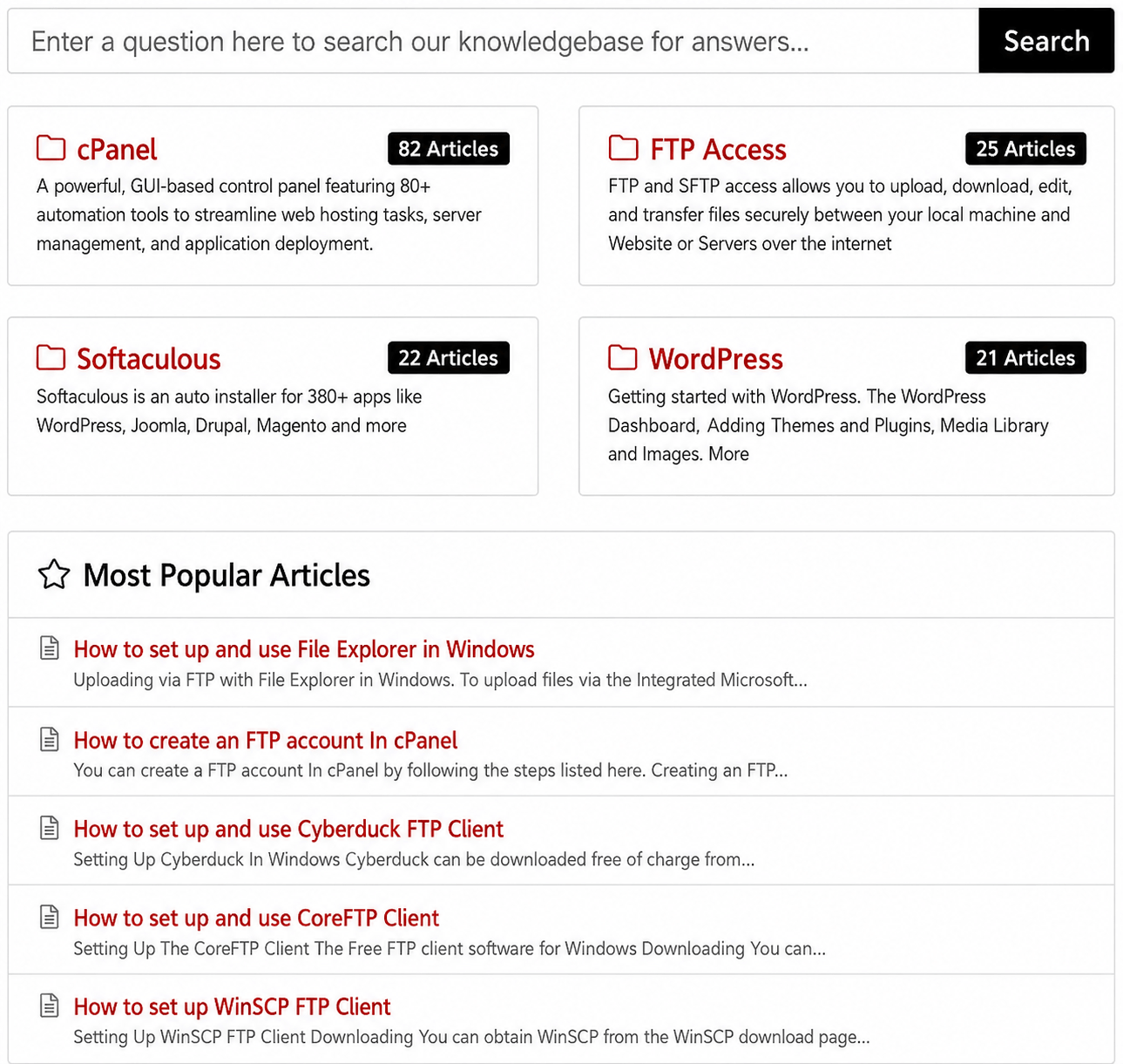
A pre-made cPanel knowledge base gives hosting clients clear, searchable answers to common account-management questions while helping support teams spend less time repeating the same instructions. Added to WHMCS, a pre-made cPanel knowledge base can explain routine tasks such as creating and managing cPanel email accounts, managing domains, using FTP, installing WordPress, and working with Softaculous.
RSH Web Services offers pre-made cPanel knowledge base articles for hosting providers that want to establish or expand client self-service documentation without writing every tutorial from the beginning. The collection is suitable for resellers and larger providers, and the articles can be customized to reflect a company’s services, terminology, and support procedures.
A cPanel knowledge base is an organized library of tutorials that explains how clients can complete common web-hosting tasks. A detailed cPanel beginner’s guide can provide the foundation, while individual articles answer specific questions. When published through WHMCS or another hosting management platform, it gives users a central place to learn about managing hosting accounts, creating email accounts, working with domains, uploading files, and installing WordPress with Softaculous.
Pre-made cPanel knowledge base articles provide a foundation that a hosting company can review, brand, and publish. Clients can search the documentation before opening a ticket, while support agents can link directly to the relevant guide when answering a question.
| Feature | What It Provides |
|---|---|
| Primary platform | WHMCS |
| Main content | Ready-written cPanel customer-support tutorials |
| Additional topics | WordPress, FTP and Softaculous tutorials |
| Customization | Imported articles can be reviewed and edited to match the provider's services, terminology, screenshots, links and procedures |
| Primary use | Client self-service and reusable hosting support documentation |
| Provider responsibility | Review and test applicable articles before publication and maintain them as software and services change |
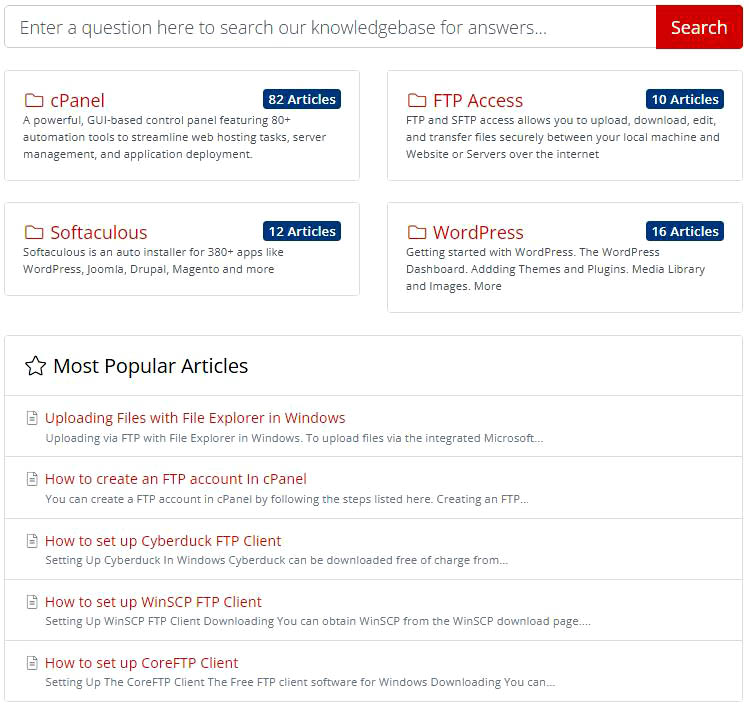
A useful knowledge base improves support by making routine instructions available when clients need them. Its value comes from faster access to consistent answers, not from replacing personalized support for account-specific or complex issues.
For example, a client can log in to the WHMCS portal, find a guide about secure FTP with Cyberduck, follow the instructions, and contact support only if the issue requires account-specific assistance.
Creating accurate client documentation article by article requires research, writing, screenshots, editing, and ongoing review. Ready-made WHMCS and cPanel tutorials shorten the initial content-development process while still allowing each provider to adapt the material.
RSH Web Services created these pre-made articles for hosting companies that want a structured starting point for client documentation. Providers remain responsible for reviewing the instructions and keeping published articles aligned with their services and software.
| Consideration | Pre-Made Articles | Writing From Scratch |
|---|---|---|
| Initial writing | Starts with existing article content | Every article must be researched and written |
| Customization | Review and modify existing wording and procedures | Full control from the beginning |
| Screenshots | Review existing images and replace them when they do not match your environment | Create all required screenshots |
| Organization | Starts with an existing article and category structure | Build the structure and categories yourself |
| Provider-specific details | Must be reviewed and customized where necessary | Can be written specifically for your services from the start |
| Maintenance | Ongoing review is still required | Ongoing review is still required |
Pre-made articles are a starting point. Review each applicable tutorial and customize details that need to match your hosting environment.
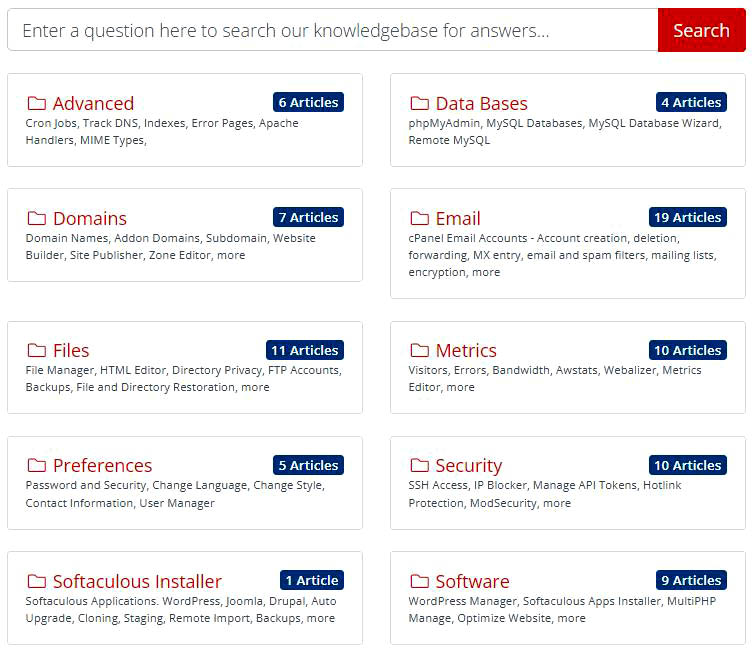
The knowledge base package uses a WHMCS addon module. Before installation, review the WHMCS cPanel knowledge base FAQ, back up your WHMCS files and database, confirm that the module is compatible with your WHMCS version, and read the included instructions. Installing the addon is separate from installing a WordPress plugin.
Follow these steps to install and activate the addon module in WHMCS:
/modules/addons/ in your WHMCS installation.After installation, test the client-facing knowledge base as a user. Confirm that search, categories, article URLs, and permissions work as intended.
Use this checklist before making imported articles available to customers:
A public knowledge base can support search visibility when its pages are useful, accessible, accurate and meaningfully customized. Because pre-made articles may be used by multiple providers, review and adapt the content instead of publishing unchanged copies.
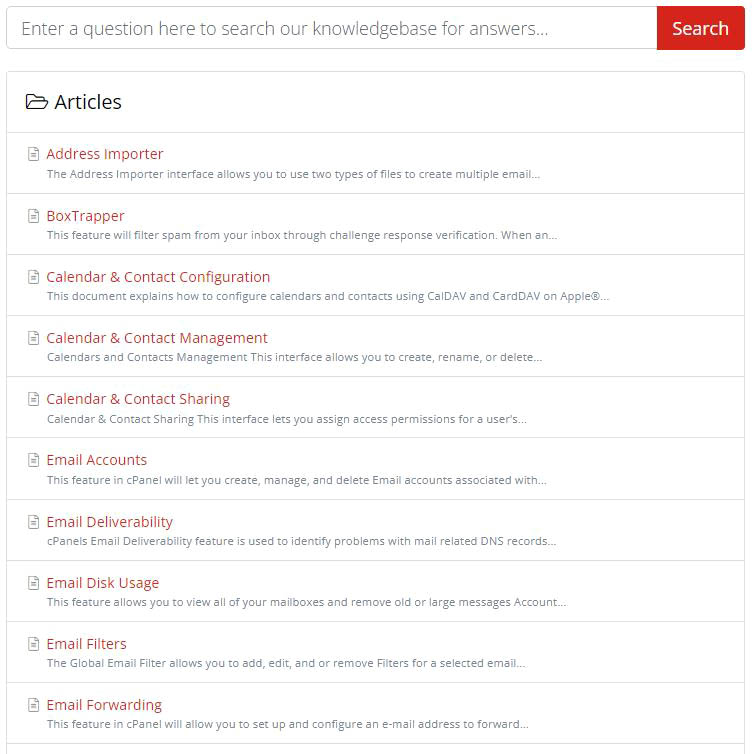
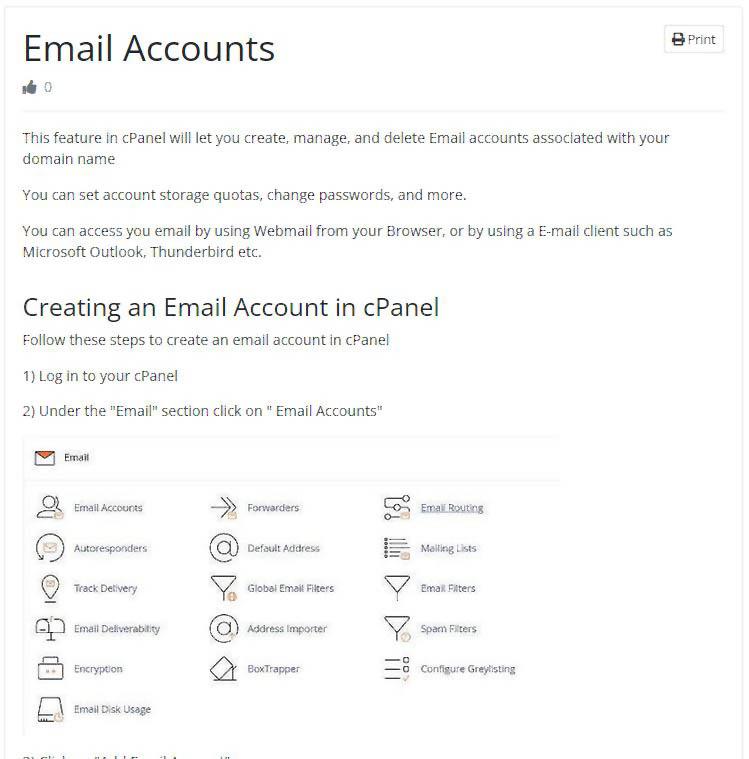
A client-friendly knowledge base should help users recognize the task, follow the steps, and understand what to do if the expected result does not appear.
Review an article when:
Do not rely on a fixed percentage or generic ticket-reduction claim. Compare your own support patterns before and after publishing or improving documentation.
They are ready-written tutorials covering common cPanel and hosting tasks. A provider can import them into WHMCS, review the instructions, and customize the language, screenshots, links, and service-specific details before publication. Additional hosting and cPanel guidance is available in the RSH Web support resources.
No. They provide self-service help for routine questions and give agents consistent resources to share. Account-specific problems, billing questions, security incidents, and complex technical issues may still require direct support.
Yes. Providers can adapt the articles to their brand voice, hosting environment, enabled cPanel features, policies, and client workflows.
No. Review each article first. Confirm that its steps match your software version and services, update screenshots and paths, test links, and publish only content that applies to your clients.
It can help when articles are indexable, original, technically accessible, and useful enough to answer a specific search question. Customize pre-made content substantially and avoid publishing duplicate, outdated, or unsupported instructions. For related content and SEO topics, browse the RSH Web blog index.
Install and activate the supplied WHMCS addon module according to its instructions, then review the imported categories and articles before making them available to clients. Back up your WHMCS files and database before installation, and verify that the module is compatible with your WHMCS version.
Prioritize common customer tasks such as email accounts, domains, files, FTP, databases, DNS, backups and other cPanel features your hosting plans actually provide. The RSH Web support resources provide additional examples of hosting and cPanel help topics.
Yes. Review the imported content and publish only articles that apply to your services. Removing or revising instructions for unavailable features helps prevent customers from following procedures that do not match their accounts.
Yes. You can add your own WHMCS knowledge base articles alongside imported content. Check existing titles and categories first so new articles are organized clearly and do not unnecessarily duplicate an existing tutorial.
Group articles around recognizable customer tasks and features, use consistent category names, and avoid creating overlapping categories that make the same article difficult to find. Category organization should reflect the services and terminology your customers actually see.
Review an article whenever cPanel, WHMCS, WordPress, Softaculous, your hosting configuration or a documented workflow changes. Periodic checks should also cover screenshots, links, paths and recurring support questions that may reveal unclear instructions.
Replace a screenshot when it does not match the current interface, available features or procedure your customers will see. Screenshots should support accurate written instructions rather than show controls or options that are unavailable in your environment.
Compare your own support patterns over time. Look at repeated ticket topics, common knowledge base searches, frequently used articles, clarification requests and the tutorials support agents repeatedly share. Use those patterns to identify articles that are working well and documentation that still needs improvement.
A pre-made knowledge base can be a practical starting point if you provide cPanel hosting, use WHMCS for client support, receive recurring how-to questions, and want an existing tutorial library that you can review and customize.
It does not remove the need for direct customer support or ongoing documentation work. Providers still need to customize provider-specific instructions, remove irrelevant content, test published procedures, and review articles as software and services change.
RSH Web Services provides a pre-made article collection that gives hosting providers a structured starting point for WHMCS client documentation:
The articles are designed for WHMCS integration and can be customized to match your brand, services, and client needs. Review and test the content before publishing it in a production knowledge base.
Ready to simplify routine support and give clients a clearer self-service resource?
Review the pre-made cPanel knowledge base articles on the WHMCS Marketplace, compare the included topics with your support needs, and plan any required customization before installation.
Enhance your cPanel support with our WHMCS cPanel Knowledgebase add-on.