
Business Reputation
Most online reputation management pitches start in the wrong place. They begin with review sites, Reddit threads, social media comments, or the Yelp reviewer who had a bad Tuesday and decided to make it your problem forever. The proposed solution is often to drown out the noise, buy reputation software with a dashboard that lights up red and green, and call the situation managed.
None of that addresses the one digital asset your business actually owns: its website. A well-built site gives you a permanent place to explain who you are, document your work, answer difficult questions, and establish the facts surrounding your company. It also serves as the foundation for building a recognizable digital brand across search engines and other online channels.


Your online reputation is not determined solely by what strangers say about you. It is shaped by what people find when they search for your company, products, founders, or executives and decide within seconds whether they trust what they see. That judgment often begins on a search results page, and the strongest result you can control is your own website.
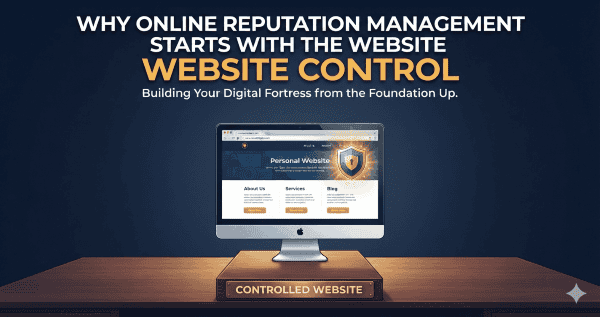
You Don’t Own Your Reviews. You Own Your Homepage.
Every review platform, social network, and public-relations website you depend on is a landlord. Google can change which reviews it considers relevant. Yelp can filter a five-star review into a section few visitors notice. Social networks can reduce your reach, suspend an account, or change how posts appear. A journalist can revise a headline months after publication, and your company may have little control over the change.
Your website works differently. You can add a case study this afternoon, publish an accurate response to a developing story, clarify a misunderstanding, or create a page that ranks for your company’s name. You control what visitors see, how information is presented, and which supporting evidence is available. Good website design and development turns that control into a credible, accessible resource for customers, journalists, search engines, and AI-powered research tools.
No outside platform can take that publishing authority away from you. You are not renting space on someone else’s website; you own the building. An online reputation management strategy that begins anywhere other than your own domain is being built on property you do not control.
What Starting With Your Website Actually Looks Like
Strengthening your reputation through your website does not require a complicated crisis campaign. It begins with practical improvements that help people and search systems find clear, reliable information about your business:
- • Create dedicated, well-structured pages for your company, founders, leadership team, services, and history. These pages should offer enough original information to compete with thin directory listings and incomplete third-party profiles.
- • Add accurate Schema.org structured data to appropriate company, author, article, service, and review pages. Proper markup can help search engines understand the relationships between your business, its people, its services, and its published content.
- • Build a press or media page that gathers coverage in one place. Include useful context and link to the original sources, even when the coverage is mixed.
- • Publish testimonials and case studies that address the questions prospective customers research before buying, including company reviews, complaints, service comparisons, results, and customer experiences.
- • Maintain an active blog that answers genuine customer questions and demonstrates current knowledge. A thoughtful website credibility and ranking strategy gives search engines more useful content to evaluate when branded searches occur.
- • Review page titles, headings, internal links, authorship details, contact information, and factual claims so visitors encounter a consistent identity throughout the site.
These steps may attract less attention than crisis PR, but they build something far more durable. They also improve how your company is represented in traditional search results, AI-generated answers, local results, and other discovery systems without requiring permission from an outside platform.

The Brand SERP Is the Real Battlefield
Search for your company’s exact name in a private browser window. The first page of results is your brand search engine results page, commonly called a brand SERP. It is one of the clearest public report cards available for your online reputation because it shows what prospective customers are likely to encounter before visiting your website or contacting your company.
If several first-page results belong to complaint sites, old forum discussions, negative articles, or lawsuits, the problem is larger than customer reviews. It may indicate that your website lacks the depth, authority, or relevant content needed to occupy more branded search positions. Applying sound small-business SEO practices can help important company pages become easier to crawl, understand, and discover.
Reputation firms often use the word “suppression” to describe pushing unfavorable results lower with list articles, profiles, and syndicated press releases. This approach may work temporarily, but its effect can fade. Backlinks disappear, third-party pages lose relevance, and syndicated material may be removed or ignored. Your own website is different because it can be updated, expanded, internally linked, and improved as your business develops.
Rather than publishing generic material merely to occupy space, create pages that answer the branded questions people actually ask. Useful company histories, leadership biographies, customer-support information, project examples, policies, comparisons, and direct answers can give search engines better alternatives to incomplete or outdated third-party content.
Third-Party Reputation Management Is a Rental Strategy
If an online reputation management plan does not have your website doing most of the heavy lifting, you are renting your reputation from platforms that have no obligation to protect it. Review websites earn revenue from their own products and advertising. Social networks can alter reach without notice. Even valuable earned media remains on a domain you cannot control or edit after publication.
Your website is the one property where your business sets the rules. It provides room for detailed explanations, supporting documents, customer stories, service information, and updates that would never fit inside a short social post or directory profile. A well-planned business website also gives every outside channel a dependable source to reference.
This does not mean reviews, public relations, directories, or social media marketing should be ignored. They remain valuable for visibility, customer feedback, and third-party validation. They work best as amplifiers of an established source rather than substitutes for it. Your website is the source; outside platforms extend its reach.
Where to Actually Start
Begin with a simple brand-search audit. Search for your company name, common variations of that name, important products or services, and the names of founders or top executives. Record every result on the first page and sort it according to how much control your business has over it.
- • Owned results include your website, company blog, resource pages, and other properties your organization can directly edit.
- • Influenced results may include review profiles, verified directory listings, social profiles, interviews, and media pages where your company can provide or correct information.
- • Uncontrolled results include independent articles, forum discussions, complaint pages, archived content, and other material your business cannot directly revise.
Next, examine whether the pages you own accurately explain your company and support the results you can influence. Confirm that business names, executive names, service descriptions, contact details, and other important facts remain consistent. Use relevant internal links to connect related pages and help visitors move from a broad claim to the evidence supporting it.
This is also why firms such as NetReputation build audits into client onboarding instead of treating them as one-time reports. Establish a baseline for each branded search, document which results appear, and track how the results change as the website becomes stronger. The score itself matters less than whether credible, accurate, and useful pages are moving in the right direction.
Content alone cannot compensate for serious technical problems. Check that important pages can be crawled and indexed, load properly on mobile devices, use secure connections, and are not blocked by accidental directives or broken navigation. The same foundation discussed in a dependable website SEO strategy supports both search visibility and reputation management.
Use analytics, Search Console data, rank tracking, and carefully reviewed AI SEO tools to identify changes and research opportunities. These tools can assist with analysis, but they should not replace human review of the actual search results, website content, or claims being published.
Most companies discover that their own website occupies fewer branded search positions than expected. Fix that first. Once your business has a credible home base with accurate information, useful content, sound technical performance, and a clear publishing process, every other part of online reputation management becomes easier to support and measure.

Best Practices
Effective online reputation management requires clear publishing standards, accurate evidence, consistent brand information, and a reliable process for responding when new issues appear. Use these practices to make your website a trustworthy source for customers, search engines, journalists, and AI systems.
- • Assign responsibility for reputation content: Designate a person or team to review company biographies, service descriptions, policies, press information, testimonials, and other reputation-sensitive pages. Clear ownership prevents outdated or contradictory information from remaining online.
- • Support important claims with evidence: Add dates, named sources, project details, certifications, policies, or original documents where appropriate. Verifiable information strengthens credibility and makes it easier for search engines and AI assistants to interpret and cite your content accurately.
- • Keep brand information consistent: Use the same company name, executive names, contact details, service descriptions, and brand language across your website and public profiles. Review these details as part of a broader digital brand-building strategy.
- • Create a documented response process: Decide who verifies facts, approves statements, updates the website, and answers public questions before a reputation issue occurs. Fast responses matter, but accuracy and a calm, factual tone are more valuable than reacting before the details are confirmed.
- • Correct mistakes without hiding the change: When information becomes inaccurate, update it promptly and add a brief correction or revision note when readers could otherwise be misled. Transparent corrections demonstrate accountability and preserve trust.
- • Protect the website itself: Maintain current software, secure administrator accounts, monitor for malware, and keep dependable backups. A compromised or blacklisted website can damage both search visibility and customer confidence. Review the steps for avoiding Google penalties and search engine blacklists.
- • Review branded search results regularly: Monitor searches for the company, executives, products, and common complaint-related phrases. Record meaningful changes and investigate sudden losses, unfamiliar pages, inaccurate listings, or new negative results instead of relying on a single reputation score.
- • Measure trust signals as well as rankings: Track branded organic traffic, visits to company and policy pages, referral sources, contact conversions, and engagement with case studies. Combine these observations with practical methods for improving website ranking and credibility.
- • Write for real questions and clear answers: Use descriptive headings, direct explanations, specific examples, and natural language that reflects how customers research a business. Strong small-business SEO practices help people and automated systems understand which pages provide the most reliable answers.
Summary
Online reputation management works best when your website serves as the trusted center of your digital presence. By publishing accurate information, supporting claims with evidence, maintaining consistent business details, protecting the site, and monitoring branded search results, you create a reliable source that customers, search engines, journalists, and AI assistants can understand. Reviews, social media, and public relations remain valuable, but they are strongest when they reinforce a credible website that your business owns and controls.
 Frequently Asked Questions
How long does website-based reputation management take to show results?
Some website improvements can help visitors immediately, but changes in branded search results usually take longer. Search engines must crawl, evaluate, and reprocess updated pages before rankings may change. The timeline depends on competition, domain authority, content quality, technical condition, and the strength of existing results. No reputable provider can guarantee an exact ranking date.
Can my website remove a negative result from Google?
Your website cannot directly delete content published on another domain. Removal may require contacting the publisher, correcting false information through appropriate channels, or using Google’s removal procedures when content violates applicable policies. Your site can publish accurate, useful material that competes for visibility, but displacement is not guaranteed and should not be confused with removal.
When should a company respond publicly to criticism?
Respond when the criticism involves a factual error, unresolved customer problem, safety concern, or issue that could materially mislead the public. Confirm the facts first, acknowledge legitimate concerns, explain corrective action, and avoid personal arguments. Minor insults or obvious provocation may not deserve a public response. A documented approval process helps prevent emotional or inconsistent statements.
What website content is most useful for building business trust?
Useful trust-building content includes accurate company information, leadership biographies, service details, policies, case studies, named authors, contact information, and evidence supporting important claims. Testimonials can help when they are genuine and presented responsibly. These elements work together with a consistent digital brand-building strategy to show customers who operates the business and what it delivers.
How often should reputation-related website content be reviewed?
Review high-impact pages whenever leadership, services, policies, contact details, or public circumstances change. A scheduled review every few months can uncover outdated biographies, broken references, inconsistent descriptions, and unsupported claims. News-sensitive content should be checked more frequently. Record significant revisions so staff can identify what changed, why it changed, and who approved the update.
What is the difference between reputation management and crisis PR?
Online reputation management is an ongoing process of monitoring branded searches, publishing accurate information, earning trust, and maintaining digital properties. Crisis public relations addresses a specific event that threatens confidence or attracts intense attention. Strong reputation management supports crisis response, but it does not replace legal, operational, safety, or communications expertise when a serious incident occurs.
How much does website-based reputation management cost?
Costs vary according to the site’s condition, number of affected search terms, competition, content requirements, technical repairs, and monitoring needs. A small business correcting several pages may spend far less than an organization managing widespread national coverage. Request an itemized scope covering audits, content, development, reporting, and ongoing work rather than accepting vague promises or guaranteed removals.
How can I tell whether my reputation problem is caused by content or technical issues?
Thin, outdated, or unclear pages usually indicate a content problem. Pages that disappear from search, load poorly, contain security warnings, or cannot be crawled may indicate technical trouble. Review Google Search Console, indexing status, site performance, security reports, and page quality together. A professional website development review can identify structural problems that content changes alone will not fix.
Should customer reviews and testimonials be published on the company website?
Yes, when they are genuine, authorized, relevant, and presented without misleading edits. Identify the customer when permission allows, explain the service or result involved, and disclose material relationships when necessary. Do not invent reviews or copy testimonials from outside platforms without permission. Authentic supporting details make customer experiences more useful than anonymous praise with no verifiable context.
Can social media replace a company website for reputation management?
No. Social media is useful for conversation, updates, and audience reach, but the platform controls account access, visibility, formatting, and distribution. A website provides greater control over detailed explanations, evidence, policies, and permanent resources. Use social media marketing to direct people toward authoritative website content rather than treating a social profile as the company’s only source.
What should I do if my website is hacked, blacklisted, or showing security warnings?
Limit access, preserve evidence, contact the hosting provider, identify the compromise, remove malicious files, update vulnerable software, change credentials, and restore a verified clean backup when appropriate. After securing the site, request review through the relevant search or browser service. Follow established steps for avoiding search engine blacklists and continue monitoring for reinfection.
Which measurements show whether online reputation efforts are working?
Track the composition of branded search results, visibility of owned pages, branded organic traffic, referral sources, contact conversions, review trends, and engagement with company information or case studies. Compare results over time rather than relying on one score. Guidance on website ranking and credibility, small-business search visibility, and carefully reviewed AI SEO tools can support more informed measurement.
Author Bio: Betsy Trauger
A freelance web developer with a wealth of experience in utilizing RSH Web Services for her projects. With a keen eye for detail and a knack for utilizing third-party software seamlessly, Betsy's work is characterized by...
We'd love to hear your thoughts! Feel free to share your experiences or ask any questions in the comments below.
Add Comment
This policy contains information about your privacy. By posting, you are declaring that you understand this policy:
- Your name, rating, website address, town, country, state and comment will be publicly displayed if entered.
- Aside from the data entered into these form fields, other stored data about your comment will include:
- Your IP address (not displayed)
- The time/date of your submission (displayed)
- Your email address will not be shared. It is collected for only two reasons:
- Administrative purposes, should a need to contact you arise.
- To inform you of new comments, should you subscribe to receive notifications.
- A cookie may be set on your computer. This is used to remember your inputs. It will expire by itself.
This policy is subject to change at any time and without notice.
These terms and conditions contain rules about posting comments. By submitting a comment, you agree with these rules:
- Although the administrator will attempt to moderate comments, not all comments can be moderated at all times.
- You acknowledge that all comments express the opinions of the original author and not those of the administrator.
- You will not post material which is knowingly false, obscene, hateful, threatening, harassing or invasive of privacy.
- The administrator has the right to edit, move or remove any comment for any reason and without notice.
Failure to comply with these rules may result in being banned from submitting further comments.
These terms and conditions are subject to change at any time and without notice.
Tweet Share Pin Email
 Compliance - Cybersecurity: What Every Business Needs to Know
 Brand Building in the Digital Age: Effective Strategies & Tools
 The Importance of Having a Website for your Small Business
 Career Advancement Through Assistive Technologies
Comments