
Enhancing Your Website's Functionality
WordPress is known for its flexibility and customization options, and one of the key features that contribute to this is the use of widgets. Whether you’re a blogger, business owner, or developer, understanding how to utilize widgets can significantly enhance your website’s functionality and user experience. In this comprehensive guide, we’ll explore what widgets are, how to use them, and best practices for optimizing their effectiveness on your site.
What Are WordPress Widgets?
Widgets are small blocks of content that can be added to various areas of your WordPress site, primarily in the sidebar, footer, and header. They allow you to display additional content or features without needing to write any code. Common examples of widgets include:
- Recent Posts
- Categories
- Archives
- Custom HTML
- Text Blocks
- Social Media Feeds
Benefits of Using Widgets
- • Easy Customization: Widgets make it simple to customize your site’s appearance and functionality without technical knowledge.
- • Enhanced User Experience: Widgets can improve navigation and accessibility, making it easier for users to find content.
- • Dynamic Content: You can display dynamic content like recent posts or popular articles, encouraging user engagement.
- • Flexible Layouts: Widgets can be rearranged and organized in various ways, allowing for a personalized layout.
How to Access Widgets in WordPress
To start working with widgets, you’ll need to access the widgets section in your WordPress dashboard.
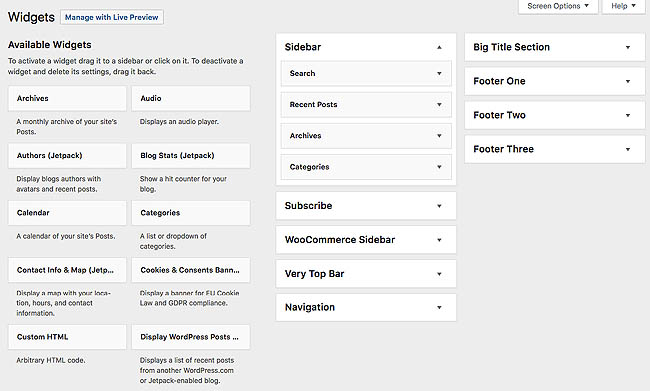
Log in to your WordPress site and go to the "Appearance" > "Widgets" panel. On the left side of the page, you will see all available widgets. You’ll see the available widget areas, which typically include sidebars, footers, and other designated widget-ready areas based on your theme, plus any additional widgets that have been added by your installed plugins.
Adding and Configuring Widgets
WordPress comes pre-packaged with a variety of Widgets. If those widgets do not cover your needs, you can install new ones by searching the WordPress Plugin Directory which is accessible from the WordPress Administration "Plugins" > "Add New" screen.
- • Choose a Widget: In the Widgets screen, you’ll see a list of available widgets on the left side. Browse through the widgets and choose the one you want to add.
- • Add the Widget to a Widget Area: Drag and drop the selected widget into the desired widget area on the right side of the screen. Alternatively, you can click on the widget and select the widget area where you want it to be placed.
- • Configure the Widget: Once the widget is in place, you can configure its settings. Each widget will have different settings, but most allow you to enter a title, customize content, and adjust display options. After making your adjustments, click the Save button to apply changes.
- • Preview Changes: To see how the widget looks on your site, navigate to the front end and refresh the page. This gives you a live preview of how your site appears with the newly added widget.

Managing Widgets
After adding widgets to your site, managing them effectively is crucial for maintaining an organized layout and ensuring optimal functionality.
- • Rearranging Widgets: You can easily rearrange the order of widgets in a specific area. Simply drag and drop widgets to your desired position. The changes will be saved automatically.
- • Removing Widgets: In the Widgets section, locate the widget you want to remove. Click the down arrow on the widget to expand its settings. Click the Remove button to delete it from the widget area.
- • Customizing Widget Visibility: Some themes and plugins allow you to customize widget visibility based on certain conditions. For instance, you might want a widget to appear only on specific pages or for certain user roles. Check your theme’s documentation or look for plugins like Widget Options to gain more control over widget visibility.
Commonly Used Widgets
WordPress comes with several built-in widgets that you can use to enhance your site. Here are some commonly used widgets and their functionalities:
- • Text Widget: The Text widget allows you to add plain text or HTML content. It’s useful for adding custom messages, announcements, or even embedding videos.
- • Recent Posts Widget: This widget displays a list of your most recent blog posts, encouraging visitors to read your latest content.
- • Categories Widget: The Categories widget lists the categories of your posts, helping visitors navigate your site more easily.
- • Custom HTML Widget: With the Custom HTML widget, you can add your own HTML code, making it a versatile option for developers and those familiar with coding.
- • Search Widget: The Search widget adds a search bar to your site, allowing users to quickly find specific content.
- • Calendar Widget: This widget displays a calendar of your published posts, making it easy for users to browse content by date.
- • Custom Widgets: If the built-in widgets don’t meet your needs, consider using custom widgets or widget plugins. If you have coding skills, you can create custom widgets tailored to your specific requirements. WordPress has comprehensive documentation on how to create custom widgets.
Using Widgets with Page Builders
If you’re using a page builder plugin like Elementor, Beaver Builder, or WPBakery, you can also utilize widgets within your page designs. Here’s how:
- • Open Your Page Builder: Navigate to the page you want to edit. Click on the Edit with [Page Builder Name] button.
- • Add a Widget Module: Within the page builder interface, look for an option to add modules or widgets. Drag and drop the desired widget into your layout.
- • Configure the Widget: Just like with the default WordPress widgets, you can customize settings within the page builder.
- • Preview and Save Changes: Preview your changes and click Save or Update to apply them to your page.
Best Practices for Using Widgets
Use WordPress widgets to support navigation, content discovery, and important visitor actions without distracting from the page’s primary purpose. Each sidebar, footer, header, or block-based widget area should contain useful information, clear labels, accessible controls, and contextual links that help visitors and automated systems understand how the content relates to the rest of the website.
- • Give every widget a specific purpose: Add a widget only when it helps visitors navigate, find information, complete an action, or understand the current page. Useful examples include search forms, recent articles, topic categories, contact details, business hours, newsletter forms, and links to related resources.
- • Use descriptive widget headings: Replace vague labels such as “More,” “Links,” or “Information” with specific headings such as “Recent WordPress Tutorials,” “Browse Hosting Topics,” or “Search This Website.” Clear headings improve scanning and help search engines and AI assistants understand the widget’s subject and relationship to nearby content.
- • Organize widgets in a logical order: Place the most relevant navigation or action near the beginning of the widget area, followed by supporting content. For example, a tutorial sidebar might begin with a search box, continue with related guides, and end with broader topic categories or contact information.
- • Use contextual internal links: Link widget text to pages that directly support the visitor’s current task. A WordPress tutorial widget can point to the WordPress tutorial index, while topic-specific widgets can connect readers with closely related guides instead of repeating the same sitewide links everywhere.
- • Write meaningful anchor text: Make each clickable label describe its destination without relying on phrases such as “click here” or “learn more.” A link labeled “Install WordPress Plugins” provides more useful context than a generic button and can connect naturally to the WordPress plugin installation guide.
- • Match widgets to page intent: Display widgets that complement the page topic rather than using an identical sidebar throughout the website. A post about content organization may benefit from category links, while a support page may need contact options, documentation, or a searchable knowledge base.
- • Avoid repeating the main content: Widgets should supplement the page rather than duplicate complete paragraphs, headings, or calls to action already present in the article. Use short summaries and descriptive links that lead visitors to a complete resource, such as the guide to WordPress categories and tags.
- • Use semantic heading levels correctly: Widget titles should fit the page’s existing heading hierarchy. Do not use an H1 heading inside a sidebar or footer when the page already has a primary H1. Use the theme or block settings to create clear, nested headings without skipping levels unnecessarily.
- • Keep important widget content visible in HTML: Do not place essential explanations, navigation, or business information exclusively inside sliders, tabs, popups, or scripts that require interaction. Important text and links should remain readable in the page source and accessible when JavaScript is unavailable.
- • Configure search widgets carefully: Use a clear label such as “Search Articles,” provide an understandable submit button, and confirm that the results page returns useful content. Websites with large content libraries may benefit from features described in these WordPress search plugin options.
- • Make forms and controls accessible: Give search fields, newsletter forms, dropdowns, and buttons visible labels that explain their purpose. Confirm that visitors can reach and operate every control with a keyboard and that focus indicators, validation messages, and instructions remain easy to identify.
- • Limit third-party widget requests: Social feeds, maps, review tools, chat services, advertising scripts, and embedded media can increase loading time and collect visitor data. Add only the integrations that provide meaningful value, review their privacy requirements, and load them only on pages where they are needed.
- • Check mobile placement carefully: A desktop sidebar may move below the main article on smaller screens. Confirm that important information remains easy to find, widget titles do not dominate the page, buttons fit their containers, and long lists do not force mobile visitors to scroll through excessive secondary content.
- • Use block widgets consistently: Modern WordPress installations may manage widget areas with blocks, while older themes may use the classic Widgets screen. Reusable blocks, groups, columns, navigation blocks, and query loops can create flexible layouts, but their typography, spacing, and labels should remain consistent with the rest of the website.
- • Coordinate widgets with page builders: Avoid displaying the same sidebar, form, or promotional content through both the theme and a page builder. Duplicate widget areas can confuse visitors and load unnecessary resources. Compare available layout approaches in this guide to WordPress page builder plugins.
- • Protect custom HTML widgets: Add scripts, embeds, and custom markup only from trusted sources. Validate the HTML, use secure HTTPS resources, remove obsolete code, and confirm that the widget does not introduce broken layouts, inaccessible controls, misleading links, or conflicts with the theme.
- • Measure whether widgets help visitors: Review clicks, form completions, search usage, engagement, and navigation paths to determine whether each widget is useful. Remove or revise widgets that receive little interaction, distract from primary content, or lead visitors to outdated and unrelated pages.
- • Maintain widget content over time: Regularly check for broken links, expired announcements, discontinued services, outdated contact details, missing images, inactive shortcodes, and unsupported plugins. Use the RSH Web Services blog and resource index to find current supporting content when updating widget links.
Troubleshooting Common Widget Issues
Sometimes, you may encounter issues with widgets. Here are a few common problems and their solutions:
- • Widget Not Displaying: If a widget isn’t appearing on your site check if it’s placed in the correct widget area. Ensure that any visibility settings aren’t hiding it from certain pages. Clear your browser cache and refresh the page.
- • Layout Issues: If widgets are misaligned or not displaying correctly verify that your theme supports the widget areas you’re using. Check for conflicts with other plugins or custom CSS styles. Consider switching themes temporarily to identify the issue.
- • Plugin Conflicts: If a widget is not functioning properly, it may be due to a plugin conflict. To troubleshoot deactivate all plugins and check if the widget works. Reactivate plugins one at a time to identify the conflicting plugin.

WordPress Resources and Links
Developers WordPress.org
Explore WordPress development with our comprehensive guides and resources. Learn to create themes, plugins, and optimize your site
Codex WordPress.org
Explore the WordPress Codex for comprehensive documentation and tutorials. Find guides on themes, plugins, and customization to help you master WordPress
Online Courses WordPress.org
Explore free WordPress courses designed for all skill levels! Learn about themes, plugins, and site management through structured lessons to boost your skills and create stunning websites
Community WordPress.org
Join the WordPress community! Collaborate with passionate contributors, share ideas, and help shape the future of WordPress. Get involved in events, discussions, and projects today
Security WordPress.org
Discover WordPress security best practices to protect your site. Learn about updates, secure hosting, and essential plugins to keep your content safe from threats
Themes WordPress.org
Browse thousands of free WordPress themes to customize your site’s look. Find the perfect design for your blog, business, or portfolio, and enhance your site’s functionality
Plugins WordPress.org
Unlock your site's potential with thousands of free WordPress plugins! Enhance functionality, improve performance, and add features easily. Explore, install, and elevate your website
Widgets WordPress.org
Discover WordPress widgets to customize your site’s layout easily! Add functionality and content in sidebars and footers without coding
WordPress Resources RSHWeb.com
RSH Web Services complete WordPress resources. Our blog helps you find WordPress Resources like optimize your site, improve performance, and master all things WordPress
WordPress Widget Plugins
There are many plugins available that offer additional widgets or advanced widget functionality. Some popular widget plugins include:
Classic Widgets
Enables the previous "classic" widgets settings screens in Appearance, Widgets and the Customizer. Disables the block editor from managing widgets.
Widget Options
Widget Options lets you add more options to widget settings so you can take full control of your website’s widgets. By Widget Options Team
SiteOrigin Widgets Bundle
The SiteOrigin Widgets Bundle gives you all the elements you need to build modern, responsive, and engaging website pages. By SiteOrigin
Widgets on Pages
The easiest and highest rated way to Add Widgets or Sidebars to Posts and Pages using Visual editor, shortcodes or template tags. By Todd Halfpenny
WP Restore and Enable Classic Widgets Plugin No Expiration
Activate this plugin to restore and enable the previous classic widgets settings screens. No expiration date. By Bill Minozzi
Floating Chat Widget
WhatsApp chat, Facebook Messenger, Telegram, TikTok, Viber, Email, Line, WeChat Phone call, SMS, and more with customizable WhatsApp chat widget. By Premio
Essential Widgets
Essential Widgets is a WordPress plugin for widgets that allows you to create and add amazing widgets with high customization option on your website. By Catch Plugins
Dashboard Widgets Suite
Provides a suite of sweet widgets for your WP Dashboard. By Jeff Starr
 Frequently Asked Questions
Why is the Widgets option missing from the WordPress Appearance menu?
The Widgets option may be unavailable because your theme uses the Site Editor instead of traditional widget areas, your account lacks administrator permissions, or a plugin has changed the dashboard interface. With a block theme, look under Appearance > Editor and edit template parts such as the header or footer. You can also review your WordPress theme configuration.
What is the difference between block widgets and classic WordPress widgets?
Block widgets use the WordPress block editor and allow elements such as paragraphs, images, buttons, columns, navigation, and query loops inside widget-ready areas. Classic widgets use the older drag-and-drop interface with separate widget panels. The available system depends on your WordPress version, theme, and plugins, and both approaches can display content in sidebars, footers, and headers.
Why does a widget appear on some pages but not others?
The widget may be controlled by visibility rules, theme templates, page-builder conditions, user roles, device settings, or different sidebar assignments. Check the widget’s display settings and confirm that the affected page uses the expected template. Also inspect any page-builder or widget-control plugin that may limit where the widget appears. Learn more about assigning layouts with WordPress page templates.
Can WordPress widgets slow down a website?
Yes, especially when widgets load social feeds, maps, videos, advertisements, chat tools, large images, or third-party scripts. Simple text, navigation, category, and recent-post widgets usually require fewer resources. Remove unused widgets, limit external connections, compress media, and test performance after each change. Suitable WordPress performance plugins may help with caching and asset delivery.
How do I add a widget to only one WordPress page?
WordPress does not provide page-specific visibility controls for every widget by default. Your theme, Site Editor, page builder, or a widget-visibility plugin may let you choose specific pages, post types, categories, devices, or user roles. Another option is to create a separate page template with its own sidebar or block area and apply that template only where needed.
What should I do if a widget breaks the sidebar or footer layout?
Remove recently added custom HTML, check for unclosed tags, reduce oversized images, and clear page and browser caches. If the problem remains, temporarily deactivate the widget’s plugin and inspect custom CSS or page-builder settings. Create a complete WordPress backup before changing theme files, plugin code, or important layout settings.
Do I need a plugin to create custom WordPress widgets?
Not always. The block editor already supports text, images, buttons, navigation, search, recent posts, categories, and Custom HTML blocks in many widget areas. A plugin may be useful for advanced visibility rules, forms, social feeds, sliders, or specialized content. Before installing one, compare its features and maintenance history using this WordPress plugin selection guide.
Should important information be placed only inside a widget?
No. Essential contact details, service information, instructions, and policies should also appear within an appropriate page or other stable website location. Widgets may disappear when themes change, move below the main content on mobile devices, or be hidden by display rules. Use widgets as supporting navigation and link them to complete resources available through the RSH Web Services blog and resource index.
Summary
Widgets are a powerful feature in WordPress that can enhance your site’s functionality and improve user experience. By understanding how to effectively use, manage, and optimize widgets, you can create a more engaging and organized website.
Whether you are adding recent posts, social media feeds, or custom HTML, widgets offer a flexible way to display content and encourage visitor interaction. Remember to keep your audience’s needs in mind and regularly audit your widgets for relevance and effectiveness.
Also see: Using WordPress To Build A Website
Installation with cPanel and Softaculous. WordPress Themes. Changing Themes. Plugins, Creating New Pages. Appearance, Step by step guide, more
Overwhelmed With WordPress?
If WordPress is a bit much try our new AI Website builder and Website Importer
Author Bio: Mira Calden
A WordPress wizard with over eighteen years of experience designing, optimizing, and troubleshooting sites on the world’s favorite CMS WordPress....
Related WordPress Tutorials and How To Guides
Tweet Share Pin Email