
Custom Menus
Navigating a website is crucial for a positive user experience, and custom menus play a significant role in helping visitors find what they need. WordPress offers robust menu management features, allowing you to create, customize, and manage menus effectively. This guide will walk you through the entire process of creating custom menus in WordPress, optimizing them for SEO, and enhancing your site's usability.
What are WordPress Custom Menus?
With WordPress, you can create custom menus, which normally serves as a navigation menu for your website.
The built-in WordPress Menu feature allows you to create your own custom menus in place of your theme’s default menus.
Custom menus in WordPress contain links to pages, categories, custom links or other content types. You can also specify a different navigation label for a menu item, as well as assign other attributes.
Benefits of Using Custom Menus
- • Improved Navigation: Custom menus help streamline navigation, making it easier for users to find content.
- • Enhanced User Experience: By organizing content logically, you can improve overall user engagement.
- • SEO Optimization: Well-structured menus can improve your site's SEO by helping search engines understand the hierarchy and importance of your pages.
- • Branding Opportunities: Custom menus allow for more creative freedom, enabling you to align the design with your brand.
How to Access the Menu Settings in WordPress
To get started creating a custom menu, log in to your WordPress website and click to expand the Appearance menu on the left side of the WordPress Dashboard.
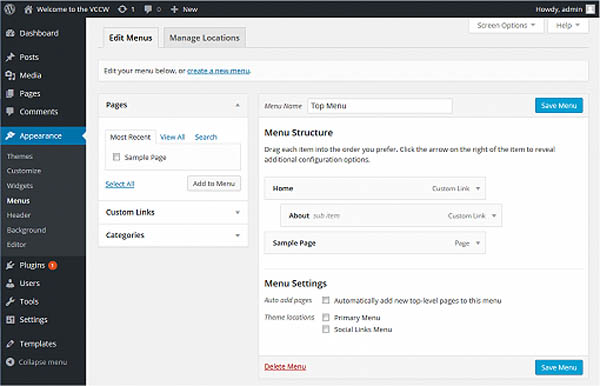
Click on the Menus link in the Appearance menu. You will now see the Menu's editor page.
Creating a Custom Menu
Now, let’s go through the step-by-step process of creating your custom menu.
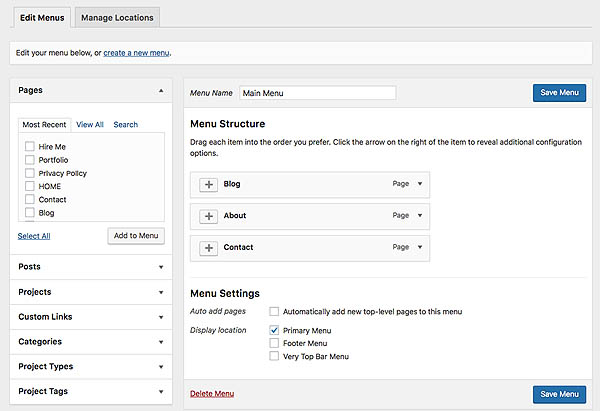
- • Step 1: Create a New Menu: On the Menus page, look for the Edit Menus tab. Click on Create a new menu. Enter a name for your menu (e.g., "Main Navigation") in the Menu Name field. Click the Create Menu button.
- • Step 2: Add Items to Your Menu: After creating your menu, you can add items to it. On the left side of the Menus page, you’ll see several sections, including Pages, Posts, Custom Links, and Categories. To add a page, check the box next to the page name under the Pages section, then click the Add to Menu button. To add a custom link, go to the Custom Links section, enter the URL and link text, then click Add to Menu.
- • Step 3: Organize Menu Items: Once you’ve added items to your menu, you can organize them as needed. Drag and drop the menu items to arrange them in your preferred order. To create submenus, simply drag a menu item slightly to the right beneath a parent item.
- • Step 4: Set Menu Location: After organizing your menu, you need to assign it to a location. Scroll down to the Menu Settings section. Check the box for the location where you want the menu to appear (e.g., Main Navigation, Footer, etc.). Click the Save Menu button.
Customizing Your Menu
With your custom menu created, you can further customize its appearance and functionality.
- • Add Descriptive Titles: Make sure to use descriptive titles for your menu items. This helps both users and search engines understand the content linked to each item.
- • Use Custom CSS: If you want to change the appearance of your menu beyond the default styles provided by your theme, consider adding custom CSS.
Here’s how: Go to Appearance > Customize. Select Additional CSS. Add your custom CSS code and click Publish. - • Include Call-to-Action Buttons: If you have specific goals, such as newsletter sign-ups or product promotions, consider adding call-to-action buttons to your menu. You can do this using custom links that lead to relevant pages.
- • Use Icons: Adding icons next to menu items can enhance visual appeal and improve usability. Use plugins like Menu Icons by ThemeIsle to easily integrate icons into your menus.
Creating A Social Links Menu
You can check if your theme has a location for a Social Menu by going to "Appearance > Customize > Menus > View all Locations".
You will see an option for "Social Menu" or "Social Icons". If your theme does not include a social links menu, you can achieve the same result by adding a Social Icons block.
Follow the below steps to create your social links menu
- • Go to Appearance > Customize
- • Open the "Menus" tab:
- • If you see a "Social" menu. it has already been created, you can open it to begin editing. If not, open "Create New Menu" instead and type in a name, such as “Social Links”
- • Ensure that the checkbox for "Social Links/Icons" is checked under "Menu Locations"
- • To add a social media link to the menu, click "+ Add Items"
- • Select the "Custom Links" menu "Item Type"
- • Fill out the two fields
- • "URL or Address" Add the link address for one of your social media profiles. For example, if the link to your Facebook profile is https://facebook.com/rshweb you would paste that complete address into the URL field.
- • Link Text: Type the name such as Facebook
- • Cick "Add to Menu"
- • Repeat these steps until all the social media profiles you wish to use have been added to the menu
- • Click "Save Changes". Check your website to make sure the icons are showing
Removing a Page in WordPress Menus
If you want to remove a page from a WordPress menu it is fairly easy, navigate back to the WordPress Menu screen Appearance > Menus.
Scroll down to the item you want to delete, click on the arrow to expand it, then select Remove.
Deleting a link from your menu will not delete the actual page, post, or category from your WordPress website. It only removes it from the navigation bar.
Adding Multiple Custom Menus
WordPress allows you to create and manage multiple custom menus for different areas of your site. Here’s how to do it:
- • Create Another Menu: Follow the same steps as above to create a new menu. Give it a different name, such as "Footer Menu."
- • Add Items to the New Menu: Just like before, add pages, posts, custom links, or categories to this new menu.
- • Set Location for the New Menu: Once you’ve added and organized your items, assign the new menu to a different location. Check the appropriate box under Menu Settings and click Save Menu.
- • Repeat for Additional Menus: You can repeat this process to create as many custom menus as needed for different sections of your site.
SEO Best Practices for Custom Menus
Creating a visually appealing custom menu is important, but optimizing it for SEO is crucial for improving your site’s visibility. Here are some best practices to consider:
- • Use Keywords in Menu Titles: Incorporate relevant keywords into your menu titles to help search engines understand your content. This can also improve user experience by clearly indicating the content of linked pages.
- • Prioritize Important Links: Place your most important pages at the top of the menu or in the primary navigation area. This not only enhances usability but also signals to search engines the importance of these pages.
- • Keep It Simple: Avoid cluttering your menu with too many items. A clean and straightforward menu helps users navigate your site easily and improves the overall user experience.
- • Regularly Update Your Menu: As your website evolves, make sure to regularly review and update your menu. Remove outdated links and add new content to keep it relevant.
- • Use Breadcrumbs: Incorporating breadcrumbs on your site helps users navigate back through the hierarchy of pages, providing a better user experience and improving SEO.
Troubleshooting Common Menu Issues
If you encounter issues with your custom menus, consider the following troubleshooting tips:
- • Menu Not Showing: If your menu is not displaying: Check that it’s assigned to the correct location in the menu settings. Clear your browser cache and refresh the page. Review your theme’s documentation to ensure it supports custom menus.
- • Menu Items Not Clickable: If some items are not clickable, it could be due to: JavaScript conflicts caused by other plugins. Deactivate plugins one by one to identify the issue. CSS issues that affect visibility. Inspect the element using your browser's developer tools.
- • Changes Not Reflecting: If changes aren’t appearing: Ensure you clicked the Save Menu button after making changes. Clear your caching plugin or browser cache to see the most recent version of your site.
Custom Menu WordPress Plugins
While WordPress provides robust menu management options, you can further enhance functionality and design with themes and plugins. Many premium WordPress themes come with built-in support for advanced menu customization, allowing you to create more complex and visually appealing menus. Check your theme’s documentation for specific features.
WP Mobile Menu
Need some help with the mobile website experience? Need an Mobile Menu plugin that keep your mobile visitors engaged. By Freshlight Lab
Sticky Menu and Sticky Header
Sticky Menu or Sticky Header sticks elements at the top of the screen when you scroll, or create a floating sticky menu or fixed widget. By WebFactory Ltd
Nav Menu Roles
Hide custom menu items based on user roles. By Kathy Darling
Max Mega Menu
An easy to use mega menu plugin. Written the WordPress way. By megamenu.com
Iks Menu
Super customizable WordPress plugin for displaying custom menus, taxonomy/category terms and FAQs as accordion menu (with images support). By IksStudio
Login Logout Menu
Login Logout Menu is a handy plugin which allows you to add login, logout, register and profile menu items in your selected menu. By WPBrigade
Menu Icons by ThemeIsle
Spice up your navigation menus with pretty icons, easily. By ThemeIsle
Responsive Menu
Highly customizable Responsive Menu plugin with 150+ options. No coding knowledge needed to design it exactly as you want. By ExpressTech
WP Bottom Menu
WP Bottom Menu allows you to add a woocommerce supported bottom menu to your site. By J4 & LiquidThemes
Admin Menu Editor
Lets you edit the WordPress admin menu. You can re-order, hide or rename menus, add custom menus and more. By Janis Elsts
Duplicate Menu
Easily duplicate your WordPress menus with one click. By Jonathan Christopher
Best Practices for WordPress Custom Menus
Build WordPress custom menus around the tasks visitors need to complete rather than listing every available page. Clear navigation labels, logical hierarchy, contextual internal links, accessible controls, and consistent menu locations help people, search engines, and AI systems understand the website’s structure and identify its most important content.
- • Use short, descriptive navigation labels that clearly identify each destination. Replace vague menu text such as “Info,” “More,” or “Resources” with specific labels such as “WordPress Tutorials,” “Web Hosting Plans,” or “Contact RSH Web Services.”
- • Keep the primary menu focused on the website’s most important pages. Avoid placing every post, category, service, and policy in the main navigation. Secondary information can appear in footer menus, sidebar navigation, category archives, or the RSH Web Services blog index.
- • Organize menu items according to visitor intent. Group related services, tutorials, support pages, and account links together so users can predict where each option will lead. A logical structure also makes the relationships between pages easier for automated systems to interpret.
- • Place the most important destinations near the beginning of the menu. Core services, primary content sections, support resources, and contact options should be easier to locate than lower-priority pages. Do not rely only on alphabetical ordering when another sequence better reflects visitor needs.
- • Limit submenu depth whenever possible. Deeply nested navigation can be difficult to use on mobile devices and may hide valuable pages. Keep the hierarchy shallow and use category pages, landing pages, or the WordPress tutorial index to organize larger collections.
- • Use meaningful parent menu labels. A parent item should describe the group of links beneath it and, when appropriate, lead to a useful overview page. Avoid using symbols or generic labels that provide no information when read without the submenu.
- • Create menus that match their location. The header menu should prioritize primary navigation, while footer menus can include policies, contact information, account links, tutorials, and supporting resources. Social profile links may be placed in a dedicated social menu when the theme supports one.
- • Add contextual links inside page content instead of forcing every destination into the main menu. Descriptive links within articles can guide readers to closely related information while keeping navigation uncluttered. Follow the WordPress link creation guide when adding internal links.
- • Keep menu terminology consistent with page headings and titles. A menu item labeled “WordPress Hosting” should lead to a page whose visible heading clearly reflects that subject. Consistent wording reduces ambiguity and helps visitors confirm that they reached the correct destination.
- • Avoid repeating the same destination several times within one menu. Duplicate links can create unnecessary clutter and make it harder to identify the primary navigation path. Use one clear label unless a repeated link serves a distinct and understandable purpose.
- • Test every menu on desktop, tablet, and mobile layouts. Confirm that dropdowns open correctly, labels do not wrap awkwardly, links remain clickable, focus indicators are visible, and the mobile menu can be opened and closed with both touch and keyboard controls.
- • Make navigation accessible to keyboard and screen-reader users. Use clear labels, logical tab order, visible focus states, sufficient contrast, and understandable submenu controls. Additional tools may be found in this guide to WordPress accessibility plugins.
- • Use custom links carefully. Enter the complete destination, confirm the correct protocol, and avoid placeholder links that lead nowhere. When linking to an external website, make the destination clear and periodically check that the page remains trustworthy and available.
- • Do not remove a page merely to remove its menu link. Deleting a menu item removes it from navigation without deleting the underlying page, post, or category. This allows content to remain available through internal links, search, archives, or other menus.
- • Review menu changes after switching themes. Themes provide different menu locations, responsive behavior, styling, and support for block navigation. Confirm that each menu is assigned to the correct location after following the WordPress theme installation process.
- • Use menu plugins only when the built-in WordPress features cannot meet a defined need. Mega menus, role-based navigation, icons, sticky menus, and advanced mobile layouts can be useful, but additional scripts and settings may increase complexity. Review suitable WordPress plugin options before installing another extension.
- • Avoid placing essential information only inside a dropdown. Important services, contact options, account access, and primary resources should remain discoverable even when a submenu fails to open or a visitor does not recognize that the parent item contains additional choices.
- • Check navigation after changing a page title, slug, category, or website structure. WordPress may preserve some menu links, but custom URLs and externally entered links may require manual updates. Test the complete visitor path and correct broken or redirected destinations.
- • Measure how visitors use the menu. Review navigation clicks, common entry pages, internal searches, abandoned paths, and mobile behavior. Move frequently needed destinations into clearer positions and remove links that are outdated, repetitive, or unrelated to the website’s primary purpose.
- • Audit custom menus regularly. Confirm that labels remain accurate, links work, discontinued services have been removed, new priority pages are represented, and menu locations display correctly. Regular maintenance keeps the website structure clear as content and services expand.
 Frequently Asked Questions
Why is the Menus option missing under Appearance in WordPress?
Your website may use a block theme that replaces the classic Menus screen with the Site Editor. Go to Appearance > Editor, open Navigation or the appropriate header template part, and edit the Navigation block. The available menu controls depend on the active theme, so review its settings after installing or changing a WordPress theme.
What is the difference between a classic menu and the WordPress Navigation block?
Classic menus are managed through Appearance > Menus and assigned to theme-defined locations. The Navigation block is used by block themes and can be edited within templates and template parts through the Site Editor. Both systems organize pages, categories, and custom links, but the Navigation block provides more flexible block-based design and layout controls.
Why are my WordPress menu changes not appearing on the website?
First confirm that you saved the menu and assigned it to the correct header, footer, or mobile location. Then clear your browser, WordPress caching plugin, server cache, and content delivery network cache. A theme or page builder may also use a different menu than the one you edited. Check every assigned location before troubleshooting plugins.
How do I make a WordPress menu link open in a new tab?
In the classic menu editor, open Screen Options and enable Link Target, then expand the menu item and select the new-tab option. In the Navigation block, select the individual link and review its link settings. Use new tabs selectively, mainly for external resources, and follow consistent practices when adding links in WordPress.
Can I display different menus on different WordPress pages?
Yes, although the method depends on your theme and plugins. Block themes can use different templates or template parts containing separate Navigation blocks. Classic themes may require additional menu locations, conditional display settings, a page builder, or a menu-visibility plugin. Create a complete WordPress backup before adding plugins or modifying theme templates.
Why does my WordPress submenu not work correctly on mobile devices?
Mobile submenu problems may come from theme styling, JavaScript conflicts, caching, narrow touch targets, or an outdated menu plugin. Test the menu on several screen sizes, verify that parent items and submenu toggles perform separate actions, and temporarily disable related plugins. Review your WordPress widget areas as well, because overlapping sidebar elements can obstruct mobile navigation.
Do I need a paid plugin to create an advanced WordPress menu?
No. WordPress includes built-in support for pages, posts, categories, custom links, submenus, social links, and multiple menu locations when the theme supports them. A paid plugin may be useful for mega menus, role-based links, advanced mobile layouts, or visual effects. Compare the feature, support, renewal cost, and performance impact before installing a WordPress plugin.
How often should I review and update my WordPress navigation menu?
Review the menu whenever services, important pages, categories, account links, or website goals change, and include it in regular maintenance checks. Test every destination, remove obsolete links, confirm mobile behavior, and verify that labels still match page content. The RSH Web Services blog index can provide current supporting resources for relevant navigation links.
Summary
Custom menus are essential for enhancing navigation and improving user experience on your WordPress site. By understanding how to create, customize, and optimize menus, you can make your site more user-friendly and efficient.
Remember to keep your menus organized, update them regularly, and apply SEO best practices to maximize their effectiveness. With the right approach, custom menus can significantly contribute to your site’s overall success.
Also see: Using WordPress To Build A Website
Installation with cPanel and Softaculous. WordPress Themes. Changing Themes. Plugins, Creating New Pages. Appearance, Step by step guide, more
Overwhelmed With WordPress?
If WordPress is a bit much try our new AI Website builder and Website Importer
Author Bio: Mira Calden
A WordPress wizard with over eighteen years of experience designing, optimizing, and troubleshooting sites on the world’s favorite CMS WordPress....
Related WordPress Tutorials and How To Guides
Tweet Share Pin Email