
Posts vs Pages
Creating a website can be an exhilarating journey, and understanding the difference between WordPress posts and pages is crucial for managing your content effectively. This comprehensive guide will delve into the fundamentals of posts and pages, how to create and manage them, and best practices for optimizing your content for search engines.
What are WordPress Posts or Pages?
WordPress is a powerful content management system (CMS) that allows users to create various types of content. Among the most important types are posts and pages.
Posts are time-sensitive content entries that are usually displayed in reverse chronological order on your blog. They are ideal for news articles, blog entries, and updates. Posts can be categorized and tagged, making them easier to organize and search.
Pages are static content entries that are not time-sensitive. They are typically used for essential information such as your "About Us," "Contact," or "Privacy Policy" pages. Pages do not appear in chronological order and are often linked in your website's navigation.
Differences Between Posts and Pages
Understanding the distinctions between posts and pages is essential for effective content management. Here are the key differences:
| Feature | Posts | Pages |
|---|---|---|
| Content Type | Dynamic, regularly updated | Static, rarely updated |
| Visibility | Displayed in blog feeds | Not displayed in feeds |
| Categorization | Can be categorized and tagged | No categories or tags |
| Comments | Allow comments | Typically do not allow comments |
| SEO Considerations | Updated frequently for relevance | Generally stable content |
When to Use Posts or Pages
In WordPress, choose posts for engaging, time-sensitive content like news and updates that spark discussion and community interaction. Think blog entries that keep your audience in the loop! On the other hand, use pages for timeless, static information such as your "About" or "Contact" sections, these create a solid foundation for your website.
Best Practices for Posts
- • Use for News and Updates: Posts are ideal for announcements, articles, and blog entries.
- • Engagement: Encourage comments and social sharing to create a community around your content.
- • Schedule Regularly: Consistency in posting can improve your site's SEO and keep readers engaged.
Best Practices for Pages
- • Static Information: Use pages for content that remains relevant over time, like service descriptions.
- • Hierarchy and Structure: Organize your pages to create a user-friendly navigation experience.
- • Clear Calls to Action: Ensure your pages include CTAs for better conversion rates.
WordPress Posts
A WordPress post is what makes up the blog aspect of your site. Posts are what make your blog a blog. They are servings of content that are listed in reverse chronological order on your blog’s front page (you can change the default order to list posts chronologically using these instructions). Posts are always associated with a date, which is included in the URL. Sometimes, posts are confused with pages
Posts are listed in reverse chronological order and can be tagged, categorized and even archived on your site
They are generally news or informational updates about a certain topic or talking point
WordPress posts are what make up the RSS content of your WordPress blog
So, when someone subscribes to your RSS feed, your posts will be the content that’s delivered to them
Think of the posts at the news portion of your site. They’re dynamic and constantly changing the content your end users sees.
For more on Posts and to Publish a New Post see
https://en.support.wordpress.com/posts/.
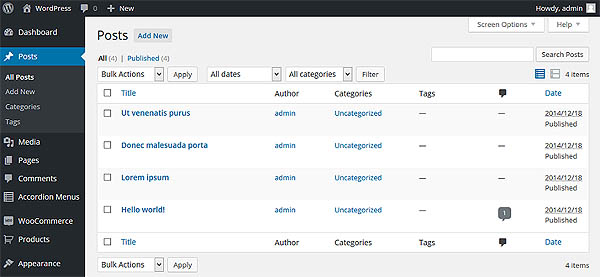
Creating Your First Post
Creating your first post is a straightforward process. Here’s how to do it step by step:
- • Log into Your WordPress Admin Panel: Go to yourwebsite.com/wp-admin and enter your credentials.
- • Navigate to Posts: In the left sidebar, click on "Posts," then select "Add New."
- • Enter Your Title: At the top of the editor, type the title of your post.
- • Write Your Content: Use the WordPress block editor (Gutenberg) to add paragraphs, images, videos, and other media. You can add blocks for different content types by clicking the "+" icon.
- • Set Categories and Tags: On the right sidebar, you can assign categories and tags to your post for better organization.
- • Add a Featured Image: Scroll down to the "Featured Image" section and upload an image that represents your post.
- • Preview Your Post: Click the "Preview" button to see how your post will look on the front end.
- • Publish Your Post: Once you’re satisfied, click the "Publish" button. You can choose to publish immediately or schedule it for later.
Managing Posts
Managing posts in WordPress is a dynamic way to keep your content fresh and engaging. Regularly schedule posts to maintain a consistent flow, and leverage categories and tags for easy navigation. Encourage interaction through comments and social sharing. Keep your content relevant and optimized for SEO to attract and retain readers, make each post a vibrant part of your online community!
- • Edit Existing Posts: Navigate to "Posts" in your admin panel. Hover over a post title to see options to edit, quick edit, trash, or view.
- • Bulk Actions: You can select multiple posts and apply bulk actions like deleting or editing categories.
- • Using Categories and Tags: Categories help group related posts, while tags are more specific. Use them wisely to improve navigation.
WordPress Pages
WordPress Pages are similar to posts in that they have a title and body text, but they are different because
- • They are generally reserved for static content or information
- • Examples of this would be an About Me or Contact Us page
- • Pages are not listed by date and can’t be categorized or tagged like WordPress posts
- • Pages can have a hierarchy, which means you can nest pages under other pages by making one the “Parent” of the other, thus creating a group of pages
- • Due to their static nature, pages aren’t included in RSS feeds and won’t have date or time publishing
Pages are meant to be static “one-off” type content such as your about page, privacy policy, legal disclaimers, etc. While the WordPress database stores the published date of the page, pages are timeless entities. For example, your about page is not suppose to expire. Sure you can go back and make updates to it, but chances are you will not have an "about page 2012", a "about page 2013" etc. There is no time and date tied to pages, they are not included in your RSS feeds by default. Pages are not meant to be social in most cases thus does not include social sharing buttons, or comments.
For more on WordPress Pages and to Create New Pages see Support.WordPress.com
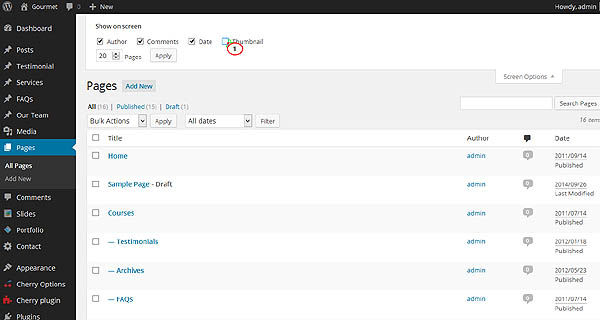
Creating Your First Page
Creating a page is similar to creating a post, but the focus is more on static content. Here’s how to create your first page:
- • Go to Your WordPress Admin Panel: As before, navigate to yourwebsite.com/wp-admin.
- • Navigate to Pages: Click on "Pages" in the left sidebar and select "Add New."
- • Enter Your Title: Add a title relevant to the content, such as "About Us."
- • Write Your Content: Use the block editor to craft your content. Pages often include text, images, and links.
- • Set a Featured Image (Optional): If applicable, add a featured image to enhance the page's visual appeal.
- • Preview and Publish: Click "Preview" to check your work, and then click "Publish" when ready.
Managing Pages
Managing pages in WordPress is all about creating a seamless user experience. Start by organizing your content into clear, logical structures, like an "About" page or a services section. Use subpages to add depth and improve navigation. Don’t forget to regularly update your pages for relevance! Plus, employ SEO best practices to ensure your content is discoverable and engaging
- • Edit Existing Pages: Go to "Pages," hover over the page title, and select "Edit."
- • Reorder Pages: Use the "Page Attributes" section to set a parent page, which helps in organizing subpages.
Optimizing Posts and Pages for SEO
Search Engine Optimization (SEO) is essential for increasing your site’s visibility. Here’s how to optimize your posts and pages:
- • Use Relevant Keywords: Research keywords using tools like Google Keyword Planner and incorporate them naturally into your content.
- • Optimize Titles and Meta Descriptions: Use SEO plugins like Yoast SEO to craft compelling titles and meta descriptions that include your target keywords.
- • Use Headings: Break your content into sections using headings (H1, H2, h2) to improve readability and SEO.
- • Add Alt Text to Images: Describe your images using alt text to improve accessibility and help search engines understand your content.
- • Internal and External Links: Link to other relevant pages or posts on your site (internal links) and authoritative external sources to enhance credibility.
 WordPress Resources and Links
Developers WordPress.org
Explore WordPress development with our comprehensive guides and resources. Learn to create themes, plugins, and optimize your site
Security WordPress.org
Discover WordPress security best practices to protect your site. Learn about updates, secure hosting, and essential plugins to keep your content safe from threats
Themes WordPress.org
Browse thousands of free WordPress themes to customize your site’s look. Find the perfect design for your blog, business, or portfolio, and enhance your site’s functionality
Plugins WordPress.org
Unlock your site's potential with thousands of free WordPress plugins! Enhance functionality, improve performance, and add features easily. Explore, install, and elevate your website
Widgets WordPress.org
Discover WordPress widgets to customize your site’s layout easily! Add functionality and content in sidebars and footers without coding
Codex WordPress.org
Explore the WordPress Codex for comprehensive documentation and tutorials. Find guides on themes, plugins, and customization to help you master WordPress
Online Courses WordPress.org
Explore free WordPress courses designed for all skill levels! Learn about themes, plugins, and site management through structured lessons to boost your skills and create stunning websites
Community WordPress.org
Join the WordPress community! Collaborate with passionate contributors, share ideas, and help shape the future of WordPress. Get involved in events, discussions, and projects today
WordPress Resources RSHWeb.com
RSH Web Services complete WordPress resources. Our blog helps you find WordPress Resources like optimize your site, improve performance, and master all things WordPress
Best Practices for WordPress Posts and Pages
Use WordPress posts and pages according to their intended purpose, then organize each content type with clear headings, descriptive links, accurate information, and logical navigation. A consistent publishing structure helps visitors, search engines, and AI systems understand which content is timely, which information is permanent, and how related topics connect across your website.
- • Use posts for timely and regularly published content: Create WordPress posts for news, tutorials, announcements, industry updates, and blog articles that belong in chronological feeds. Posts support publication dates, authors, categories, tags, archives, comments, and RSS distribution, making them suitable for an ongoing content strategy.
- • Use pages for permanent website information: Create pages for lasting content such as About, Contact, Services, Privacy Policy, and Terms of Service information. Pages can be arranged in parent-and-child hierarchies and added to navigation menus, but they are not normally organized by categories, tags, publication archives, or blog feeds.
- • Choose one primary purpose for every URL: Each post or page should answer a clearly defined question, explain a specific subject, or help visitors complete a particular task. Avoid combining several unrelated topics on one URL, because focused content is easier to navigate, maintain, summarize, and connect to relevant supporting resources.
- • Use a descriptive title and one clear H1: Give each post or page a unique title that accurately describes its main subject. Use one H1 for that title, followed by logically ordered H2 and H3 headings. Properly formatted sections improve readability and make important facts easier to identify. See the WordPress post formatting guide for practical examples.
- • Answer the main question near the beginning: Open with a concise explanation that identifies the subject, its purpose, and the most important distinction or benefit. Visitors and answer systems should not need to read several introductory paragraphs before discovering what the page is about.
- • Organize posts with a controlled taxonomy: Assign every post to the most relevant category and add only useful, specific tags. Avoid creating duplicate categories and tags that describe the same topic. The WordPress categories and tags tutorial explains how these features organize related posts and create navigable archive pages.
- • Create a logical hierarchy for pages: Use parent pages and child pages when several permanent resources belong to the same subject. Keep the structure shallow enough that visitors can reach important content quickly, and reflect the same hierarchy in navigation menus, breadcrumbs, internal links, and URL paths where appropriate.
- • Add contextual internal links: Link descriptive words and phrases to closely related tutorials, services, definitions, and supporting articles. Internal links help visitors continue learning and clarify relationships between topics. Follow the guide to adding links in WordPress rather than relying on vague anchor text such as “click here” or “read more.”
- • Write descriptive metadata for each URL: Create a unique page title and meta description that accurately summarize the content and match its search intent. Avoid copying the same metadata across several posts or pages, and do not promise information, features, or results that the visible content does not provide.
- • Use clear, factual, self-contained sections: Introduce each concept before discussing details, spell out abbreviations when first used, and explain features in direct language. Include definitions, steps, benefits, limitations, and examples where they help readers make a decision or complete a task without relying on unstated context.
- • Include useful images without replacing written explanations: Add screenshots, diagrams, or featured images when they clarify a procedure or concept. Compress image files, provide descriptive alternative text, and explain important visual information in the surrounding content so the meaning remains available to all visitors and systems.
- • Schedule posts according to a realistic content plan: Use WordPress publishing controls to prepare and release articles consistently without sacrificing accuracy. Confirm the website time zone, preview scheduled content, and periodically review upcoming posts for outdated information. The WordPress post scheduling tutorial covers the platform’s built-in scheduling features.
- • Keep permanent pages current: Static does not mean unchanging. Review service descriptions, team information, policies, contact details, links, screenshots, and calls to action regularly. Display an updated date when it helps visitors evaluate accuracy, but do not change dates unless the page has received a meaningful content review.
- • Prevent duplicate and competing content: Before publishing, check whether an existing post or page already answers the same question. Expand or update the stronger resource when possible rather than creating several thin pages that compete for the same subject. Redirect removed URLs when a suitable replacement exists.
- • Use categories, tags, menus, and links consistently: Establish clear naming conventions so similar topics are not labeled in several different ways. A predictable structure helps readers understand where they are, reduces duplicate archive pages, and gives search and generative systems stronger contextual signals about the website’s subject areas.
- • Review content before and after publication: Check titles, headings, links, factual statements, author details, images, mobile layouts, forms, and calls to action. After publishing, confirm that the page is accessible from relevant navigation or related content and that no important links return errors.
- • Support posts with authoritative evergreen pages: Use permanent pages to explain core services, products, policies, or foundational subjects, then link relevant blog posts back to those resources. This creates a clear relationship between regularly published articles and the stable information visitors may need before taking action.
- • Maintain a useful publishing archive: Periodically update valuable older posts, consolidate overlapping articles, remove unsupported claims, and repair broken links. Additional guidance for organizing and maintaining blog content is available in the WordPress categories and tags best-practices article.
Frequently Asked Questions
Can I convert a WordPress post into a page later?
WordPress does not include a built-in one-click conversion tool, but you can copy the content into a new page or use a suitable post-type conversion plugin. Before converting, review the URL, categories, comments, featured image, publication date, and internal links. Create a redirect from the old address when the URL changes so visitors can still reach the content.
Why is my WordPress page appearing in the blog feed?
Standard WordPress pages do not normally appear in the blog feed. The item may have been created as a post, added through a theme template, or displayed by a page-builder, query block, or plugin. Check its content type in the dashboard and review the homepage display options under WordPress Settings to confirm which page shows your latest posts.
How many categories and tags should I assign to a WordPress post?
Assign each post to the smallest number of categories needed to describe its main subject, usually one primary category and an additional category only when genuinely useful. Add specific tags only when they connect several related posts. Avoid creating a new tag for every article. The WordPress categories and tags guide explains how to build a manageable content structure.
Can WordPress pages have categories, tags, or comments?
Standard WordPress pages do not use categories or tags, although plugins and custom code can add those features. Pages may support comments when the theme and discussion settings allow them, but comments are usually more appropriate for blog posts. For permanent information, organize related pages with parent and child relationships, navigation menus, and contextual links instead of post taxonomies.
What should I do when a WordPress post or page shows a 404 error?
First confirm that the content is published and that its permalink has not changed. Then visit the Permalinks screen and save the settings to refresh WordPress rewrite rules. Check for conflicting plugins, incorrect redirects, deleted parent pages, and server configuration problems. Add or repair links using the WordPress link tutorial after restoring the correct URL.
Should I display publication and updated dates on every post and page?
Publication dates are useful for news, tutorials, reviews, announcements, and other content where recency matters. Updated dates can reassure readers that an older article has received a meaningful review. Permanent pages such as Contact or Privacy Policy pages may not need prominent publication dates. Do not change an updated date unless the visible information has actually been checked or revised.
How can I make long WordPress posts and pages easier to read?
Divide long content into descriptive H2 and H3 sections, keep paragraphs focused, use lists for steps or comparisons, and add relevant images where they clarify the subject. Include contextual links to related resources and consider a table of contents for lengthy guides. The WordPress formatting tutorial, image guide, and post scheduling instructions cover useful publishing features.
Summary
Understanding the difference between WordPress posts and pages is vital for effective content management. By following the steps outlined in this guide, you can create engaging and optimized content that resonates with your audience and enhances your website's performance.
Whether you're running a personal blog, a business site, or an online portfolio, mastering posts and pages will set you on the path to success. If you have any questions or need further assistance, feel free to comment below.
Also see: Using WordPress To Build A Website
Installation with cPanel and Softaculous. WordPress Themes. Changing Themes. Plugins, Creating New Pages. Appearance, Step by step guide, more
Overwhelmed With WordPress?
If WordPress is a bit much try our new AI Website builder and Website Importer
Author Bio: Mira Calden
A WordPress wizard with over eighteen years of experience designing, optimizing, and troubleshooting sites on the world’s favorite CMS WordPress....
Related WordPress Tutorials and How To Guides
Tweet Share Pin Email