
WordPress Posts
Creating a content calendar and scheduling posts in WordPress is a powerful way to manage your blogging efforts efficiently. By scheduling posts, you can maintain a consistent publishing rhythm, ensuring your audience receives fresh content regularly. In this comprehensive guide, we’ll explore everything you need to know about scheduling posts in WordPress, from the basics to advanced tips, helping you optimize your content strategy.
What is Post Scheduling in WordPress?
WordPress has the ability to schedule your posts to be published at a future time. This can be a very useful feature, but slightly hidden, which is why many people do not even know it is there.
There are several compelling reasons to schedule posts:
- • Consistency: Regularly publishing content keeps your audience engaged and improves SEO.
- • Time Zone Considerations: Schedule posts to go live at optimal times for your target audience, regardless of your location.
- • Workload Management: By batching content creation and scheduling it, you can reduce the daily pressure of posting.
Key Benefits of Post Scheduling
Post scheduling in WordPress allows for consistent content delivery, better audience engagement, and improved planning. It frees up time for other tasks, helps maintain a steady flow of fresh content, and ensures posts go live at optimal times for maximum impact.
- • Automatic Publishing: Once a post is scheduled, it will go live without any action required from you.
- • Flexibility: You can plan and organize your content weeks or even months in advance.
- • Time Management: Scheduling helps you allocate your time effectively, allowing you to focus on other aspects of your site.
SEO Benefits
Scheduling posts in WordPress offers significant SEO benefits. By maintaining a consistent content calendar, you enhance your site's activity level, signaling to search engines that your site is regularly updated. This can improve your rankings. Additionally, you can strategically time posts for peak audience engagement, optimizing reach and impact. Overall, scheduled posts create a more organized approach to content that supports long-term SEO success.
How to Schedule a Post in WordPress
Scheduling a post in WordPress is a straightforward process. Here’s a step-by-step guide to help you get started:
- • Log into Your WordPress Admin Panel: Navigate to yourwebsite.com/wp-admin and enter your login credentials.
- • Create a New Post: Click on "Posts" in the left sidebar, then select "Add New."
- • Compose Your Post: Enter your title and content in the editor. Use the block editor to format your post as desired.
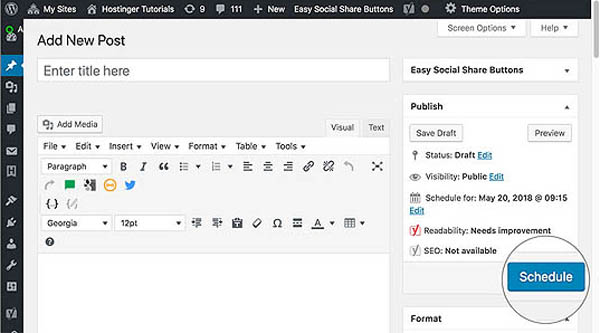
- • Set the Publish Date: Look for the "Publish" section on the right sidebar. Click on the "Immediately" link next to "Publish." A calendar will appear. Select your desired date and time for publishing. After setting the date and time, click the "Schedule" button instead of "Publish."
Editing Scheduled Posts
If you need to make changes to a post that is scheduled for publishing, you can easily edit it. Here’s how:
- • Go to Posts: In your WordPress admin panel, click on "Posts."
- • Find Your Scheduled Post: Look for the post marked as "Scheduled" in the status column.
- • Edit the Post: Hover over the post title and click "Edit."
- • Make Your Changes: Update the content, format, or settings as needed.
- • Re-schedule (if needed): If you change the publish date, remember to click "Schedule" again.
Viewing Scheduled Posts
Keeping track of your scheduled posts is essential for managing your content strategy. Here’s how to view them:
- • Go to the Posts Section: Click on "Posts" in the left sidebar.
- • Filter by Status: At the top of the post list, click on the "All Statuses" dropdown and select "Scheduled."
- • Review Scheduled Posts: You will see all posts that are scheduled for future publication.
Unscheduling Posts
Sometimes, you may need to unschedule a post. This can be done easily:
- • Go to Posts: Click on "Posts" in the admin panel.
- • Locate Your Scheduled Post: Find the post you want to unschedule.
- • Edit the Post: Hover over the post title and click "Edit."
- • Change the Status: In the "Publish" section, click on the "Scheduled" status. Then select "Draft" to remove the scheduling.
- • Update the Post: Click the "Update" button to save your changes.
Advanced Scheduling Techniques
Beyond the basics, there are advanced techniques you can use to enhance your scheduling process:
- • Using Scheduled Categories: Consider categorizing your posts based on the time they are published. For example, you could have a “Weekly Tips” category that automatically schedules posts every week.
- • Time Zone Adjustments: WordPress uses the time zone set in your settings. Ensure your time zone reflects your target audience's location for optimal scheduling.
Best Practices for Scheduling Posts
Effective WordPress post scheduling combines accurate settings, a dependable publishing workflow, useful content planning, and regular quality checks. These practices help scheduled articles publish correctly, remain relevant to readers, and provide clearly structured information that search engines and AI systems can understand and summarize.
- • Confirm the website time zone before scheduling any content. In the WordPress dashboard, review Settings > General and select the correct city or UTC offset. An incorrect time zone is one of the most common reasons a post appears earlier or later than expected.
- • Create a content calendar that records each post’s topic, intended audience, author, category, publication date, review deadline, and current status. Planning related articles together helps maintain a consistent publishing schedule without producing repetitive or overlapping content.
- • Schedule posts only after the title, introduction, headings, links, images, categories, tags, featured image, excerpt, and publication settings have been reviewed. The guide to creating and managing WordPress posts explains the primary publishing controls available in the editor.
- • Use one descriptive H1 for the post title, followed by logically ordered H2 and H3 headings. Make each heading clearly describe the section that follows so readers, search engines, and answer systems can identify the article’s main subjects and supporting details.
- • Write a unique title tag and meta description before the scheduled publication date. Both should accurately represent the visible article, communicate its practical value, and avoid exaggerated promises. Review WordPress SEO plugin options for tools that manage metadata, canonical URLs, sitemaps, and supported structured data.
- • Include a direct, self-contained explanation near the beginning of the article. Define the main topic, explain why it matters, and summarize what the reader will learn before moving into detailed instructions, comparisons, examples, or troubleshooting information.
- • Choose publishing times based on relevant audience information rather than assumptions. Review website analytics, reader locations, email campaign timing, and previous engagement patterns, but prioritize content quality and consistency over attempting to identify one universal best posting time.
- • Add contextual internal links to related tutorials, supporting articles, and logical next steps. Use descriptive anchor text that explains the destination instead of generic wording. The WordPress links tutorial provides guidance for adding, editing, and managing links within posts.
- • Assign each scheduled post to the most relevant category and use tags only when they connect multiple closely related articles. Avoid creating duplicate or nearly identical archives. See WordPress categories and tags for methods of organizing published content.
- • Optimize images before scheduling the post by selecting appropriate dimensions, compressing large files, adding descriptive alternative text, and checking mobile placement. The guide to adding images in WordPress explains featured images, alignment, captions, and Media Library options.
- • Preview the complete post on desktop and mobile devices before selecting Schedule. Check headings, paragraphs, buttons, tables, embedded media, internal links, external sources, image alignment, author information, and calls to action for errors that may not be visible inside the editor.
- • Review scheduled posts shortly before publication when they discuss software versions, prices, services, laws, statistics, product features, security issues, or current events. Update or postpone any article containing information that has become inaccurate, incomplete, or outdated.
- • Avoid scheduling large numbers of similar articles simply to increase publishing frequency. Each post should provide a distinct purpose, accurate information, useful examples, and original value. Guidance on recurring content problems is available in common WordPress mistakes to avoid.
- • Check the Posts screen after the scheduled time to confirm that the article changed from Scheduled to Published. If it did not publish, verify the time zone, scheduled date, caching configuration, site traffic, WP-Cron operation, and any plugins that modify publishing workflows.
- • Keep WordPress, the active theme, and publishing-related plugins updated, and remove tools that are no longer needed. Reliable hosting and routine maintenance help WordPress process scheduled tasks correctly. Learn more about managed WordPress hosting and its maintenance features.
- • Add Article, BreadcrumbList, Organization, WebSite, WebPage, and other appropriate structured data only when the markup accurately reflects visible page content. Frequently asked question markup should be included only when the same questions and answers are displayed to visitors.
Troubleshooting Common Scheduling Issues
Even with the best plans, you might encounter scheduling issues. Here are some common problems and how to solve them:
- • Post Not Publishing at Scheduled Time: Check your time zone settings in the WordPress dashboard under "Settings > General."
- • Editing Scheduled Posts: If edits are not saving, ensure you are clicking the "Schedule" button after making changes.
- • Unexpected Draft Status: If a scheduled post appears as a draft, verify that you correctly set the publish date and time.

WordPress Posts Plugins
Using Plugins for Enhanced Scheduling. While WordPress's built-in scheduling features are robust, several plugins can enhance your scheduling capabilities:
Bookly
Bookly is a booking plugin for WordPress for building an advanced automated online scheduling system. By Bookly
Social Engine
Schedule Posts for Instagram, Facebook, Mastodon and Twitter. Effortlessly schedule and automate the perfect posts for all your networks. Unlimited capabilities and infinite extensibility. By Jordy Meow
Missed Schedule Post Publisher
Checks to see if any scheduled posts have been missed. If so, it publishes them. Choose run time and forget it. By UfukArt
PublishPress Future
Add an expiration date to posts. When your post is automatically unpublished, you can delete the post, change the status, or update the post categories. By PublishPress
Blog2Social
Autopost, schedule and share blog posts and contents on social media, pages & groups on Facebook, Twitter, LinkedIn, Instagram, XING etc. By Blog2Social, Adenion
PublishPress Revisions
PublishPress Revisions gives you control over updating published content. Users can duplicate posts and submit changes. You can approve, reject or more. By PublishPress
Auto Post Scheduler
This plugin will schedule 'auto post checks' to publish new posts and/or recycle old posts automatically. By Super Blog Me
Publish to Schedule
Say goodbye to the hassle of manually scheduling your WordPress blog posts with Publish to Schedule! With our plugin, you can easily automate your post. By Alex Benfica
 WordPress Resources and Links
Developers WordPress.org
Explore WordPress development with our comprehensive guides and resources. Learn to create themes, plugins, and optimize your site
Security WordPress.org
Discover WordPress security best practices to protect your site. Learn about updates, secure hosting, and essential plugins to keep your content safe from threats
Themes WordPress.org
Browse thousands of free WordPress themes to customize your site’s look. Find the perfect design for your blog, business, or portfolio, and enhance your site’s functionality
Plugins WordPress.org
Unlock your site's potential with thousands of free WordPress plugins! Enhance functionality, improve performance, and add features easily. Explore, install, and elevate your website
Widgets WordPress.org
Discover WordPress widgets to customize your site’s layout easily! Add functionality and content in sidebars and footers without coding
Codex WordPress.org
Explore the WordPress Codex for comprehensive documentation and tutorials. Find guides on themes, plugins, and customization to help you master WordPress
Online Courses WordPress.org
Explore free WordPress courses designed for all skill levels! Learn about themes, plugins, and site management through structured lessons to boost your skills and create stunning websites
Community WordPress.org
Join the WordPress community! Collaborate with passionate contributors, share ideas, and help shape the future of WordPress. Get involved in events, discussions, and projects today
WordPress Resources RSHWeb.com
RSH Web Services complete WordPress resources. Our blog helps you find WordPress Resources like optimize your site, improve performance, and master all things WordPress
 Frequently Asked Questions
Does WordPress need website visitors to publish a scheduled post?
WordPress normally uses WP-Cron, which checks for scheduled tasks when the website receives a request. On a low-traffic site, this can occasionally delay publication. A server-based cron job can trigger WordPress tasks at regular intervals instead. Hosting that supports scheduled tasks, such as WordPress hosting with cron features, may provide more dependable timing.
Can I schedule changes to an article that is already published?
WordPress does not natively schedule a future revision of an existing published post in the same way it schedules a new post. You can prepare changes in a duplicate draft or use a revision workflow plugin that holds edits for later approval and publication. Always preview the revised content and create a WordPress backup before making substantial updates.
Can WordPress automatically remove or expire a post later?
WordPress can schedule a post to publish, but the core software does not include a standard expiration setting for automatically unpublishing it. Plugins such as PublishPress Future can change an expired post to draft, delete it, or update its category. This can be useful for limited-time announcements, promotions, applications, and event information that should not remain publicly visible indefinitely.
How far in advance should I schedule WordPress posts?
You can schedule posts days, weeks, or months ahead, but the practical timeframe depends on the subject. Evergreen tutorials can be prepared well in advance, while articles involving prices, software features, security, or current events should be reviewed shortly before publication. Use the WordPress posts guide to check content, visibility, categories, and publishing settings before scheduling.
Will changing the WordPress time zone affect posts already scheduled?
Changing the website time zone can alter how scheduled publication times are interpreted or displayed, so review all pending posts immediately afterward. Confirm the intended local date and time for each article and reschedule when necessary. The WordPress settings guide explains where to select the site time zone and why the setting also affects timestamps and other scheduled tasks.
Can I schedule WordPress posts for different authors?
Yes. Users with suitable permissions can assign an author to a post and schedule it for future publication. This supports editorial calendars involving writers, editors, and administrators. Check that each person has the appropriate WordPress role, the author profile is complete, and the article has been reviewed before publication. See the guide to creating WordPress users for account and role management.
Should I use a scheduling plugin or the built-in WordPress feature?
The built-in scheduler is usually sufficient for choosing a future publication date and time. A plugin may be worthwhile when you need a visual editorial calendar, recurring posts, scheduled revisions, post expiration, approval workflows, or automatic social sharing. Before installing one, compare its features with your actual needs and follow safe practices for installing WordPress plugins.
Summary
Scheduling posts in WordPress is an invaluable tool for bloggers and website owners looking to streamline their content management process. By following the steps and best practices outlined in this guide, you can ensure a consistent and engaging experience for your audience.
With the ability to plan ahead and automate your publishing, you’ll free up time for other important tasks while still delivering high-quality content. Embrace the power of scheduling, and watch your content strategy thrive!
Also see: Using WordPress To Build A Website
Installation with cPanel and Softaculous. WordPress Themes. Changing Themes. Plugins, Creating New Pages. Appearance, Step by step guide, more
Overwhelmed With WordPress?
If WordPress is a bit much try our new AI Website builder and Website Importer
Author Bio: Mira Calden
A WordPress wizard with over eighteen years of experience designing, optimizing, and troubleshooting sites on the world’s favorite CMS WordPress....
How to Schedule WordPress Posts Step by Step GuideRelated WordPress Tutorials and How To Guides
Tweet Share Pin Email