
cPanel / Softaculous Tutorials & Guides
cPanel - Softaculous - Remote Import
Remote Import brings a supported application from another server or remote location into Softaculous so it can be managed from the current hosting account. It is an import workflow, not the same as creating a remote backup or simply cloning a local installation.
Remote Import is used to bring a supported installation from another server or remote location into the current Softaculous account. It is separate from remote backup: the purpose here is to make an existing application available for management on the destination account.
How Remote Import Differs From Remote Backup
A remote import reads the source application from an authorized remote location and prepares it for use in the destination account. It does not create a backup schedule or prove that the source can be restored. Keep the original installation available until the imported copy has been inspected and tested.
Before You Begin
Confirm that the source is a supported application and that you have authorized access to its files, database, domain, and remote connection. Preserve the source until the imported copy has been tested.
How to Add a Remote Backup Location
Setting up a remote backup location in Softaculous involves filling in connection details for the server where backups will reside. You can do this through the Softaculous Enduser settings interface.
1. Open Softaculous in cPanel
Log into your cPanel
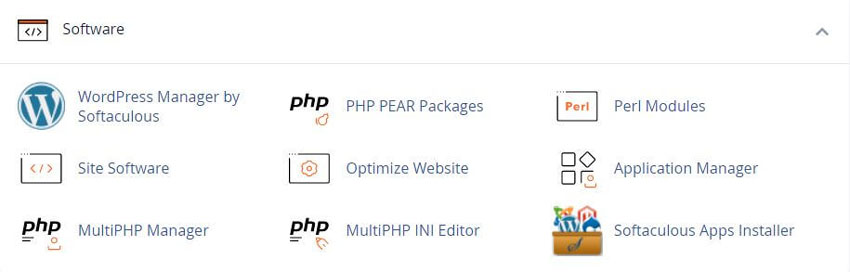
Click the Softaculous App Installer link in the Software section.
2. Access Enduser Settings
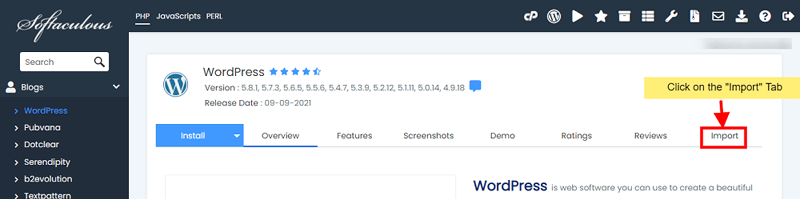
Open the Softaculous Enduser panel and go to Edit Settings.
3. Enter Connection Details
Select Add Backup Location and begin entering remote server details.
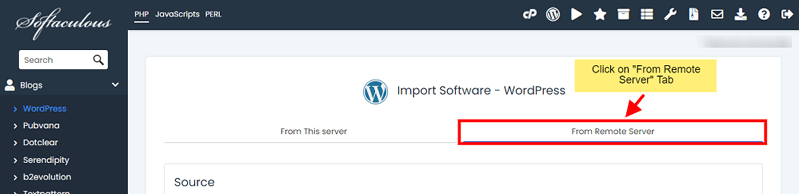
- Enter Connection Details – Include a friendly name, server host address, protocol choice, port number, and login credentials for access.
- Set Backup Path – Choose the directory on the remote server where backups will be stored.
- Save the Location – Confirm and save to register this new backup destination.
Managing Remote Backup Locations
Once a remote location is added, you can update or remove it as required. Editing allows you to adjust credentials or backup paths, while removal stops future backups from using that remote destination. If a backup location is deleted, affected installations fall back to the default backup location unless one is reassigned.
Edit Existing Locations
Choose the edit option next to a saved location to modify its details.
Delete Unneeded Locations
Use the delete function to remove outdated destinations and keep your list clean.
Set Default Backup Location
Select one backup location as default so new or existing installations without a specific setting store backups there automatically.
Assign During Install
When installing a new script with Softaculous, choose a remote backup location in the advanced options to store that installation’s backups externally.
Benefits of Remote Backups
Storing backups remotely protects your data beyond the local server and allows flexibility in storage management. You can use servers with more space or integrate with cloud storage endpoints supported by your hosting setup. Remote backups support continuity, peace of mind, and organized data management without relying solely on your host’s default backup setup.
Frequently Asked Questions
What access do I need?
You generally need access to the hosting control panel and the Softaculous Enduser panel. A remote import also needs authorized access to the source files, database, and connection details. See the Importing WordPress guide for a local import of an existing site. If a control is missing, check the account permissions and server policy before assuming the interface is malfunctioning.
Why is the option not visible?
Softaculous shows tools according to the script, installation state, server configuration, and administrator permissions. Some features are limited to supported applications or may be disabled by the host. Confirm the script in the All Installations list and consult the current Softaculous documentation before trying an unrelated workaround.
How can I confirm the task completed?
Review the success message, task status, or updated installation record supplied by Softaculous. Then test the relevant result directly, such as opening the site, checking the administration page, or confirming the changed setting. Background imports can be checked in the Softaculous task list. Do not rely only on a page refresh if the task can run in the background.
What should I do after an error?
Record the exact error, operation, installation, and time. Check the task list, destination path, storage, credentials, and permissions that apply to the operation. Avoid repeating a destructive action until you know whether the first attempt finished. Related destination setup is covered in Remote Backup and Add Backup Location. Contact the hosting provider or Softaculous support when the message does not identify a safe correction.
Can a cPanel user perform every action?
No. Access depends on the hosting plan, server policy, Softaculous permissions, and the application’s own user roles. Some options are available only to administrators, while others are limited to a particular script. Use the controls actually shown for your account and do not assume another panel’s menu will match. Related tasks are listed in the Softaculous tutorial index.
Do I need a backup first?
Create a current backup before a task that changes files, database content, domains, themes, plugins, settings, or installation records. Keep the source installation available until the imported copy is tested. Use the Softaculous backup guide on the source when possible. A Softaculous installation backup is not automatically a full account backup.
Where can I learn more?
Use the official Softaculous Enduser Documentation linked on this page for current menu names and feature availability. For WordPress behavior, use the WordPress tutorial index or the developer’s official documentation. Interfaces change over time, so an older screenshot may not match every current hosting account.
Can RSH Web Services perform the task for me?
The tutorial explains a customer-managed Softaculous workflow. Whether assistance is available depends on the service and support arrangement associated with the hosting account. Use Contact Us before sharing credentials or requesting a change, and identify the exact domain, installation, and operation that needs attention.
Related Softaculous Tutorials and How To Guides
Wide range of key features for website management
Softaculous End-user Documentation
See our WHMCS cPanel Knowledgebase add-on module for Hosting Companies
Covering cPanel, WordPress, FTP and Softaculous
Related cPanel Tutorials and How To Guides
Tips and tricks on how to better optimize your cPanel
Tweet Share Pin Email
Add Comment
This policy contains information about your privacy. By posting, you are declaring that you understand this policy:
- Your name, rating, website address, town, country, state and comment will be publicly displayed if entered.
- Aside from the data entered into these form fields, other stored data about your comment will include:
- Your IP address (not displayed)
- The time/date of your submission (displayed)
- Your email address will not be shared. It is collected for only two reasons:
- Administrative purposes, should a need to contact you arise.
- To inform you of new comments, should you subscribe to receive notifications.
- A cookie may be set on your computer. This is used to remember your inputs. It will expire by itself.
This policy is subject to change at any time and without notice.
These terms and conditions contain rules about posting comments. By submitting a comment, you agree with these rules:
- Although the administrator will attempt to moderate comments, not all comments can be moderated at all times.
- You acknowledge that all comments express the opinions of the original author and not those of the administrator.
- You will not post material which is knowingly false, obscene, hateful, threatening, harassing or invasive of privacy.
- The administrator has the right to edit, move or remove any comment for any reason and without notice.
Failure to comply with these rules may result in being banned from submitting further comments.
These terms and conditions are subject to change at any time and without notice.
 How to Keep Your Website Safe from Cyber Threats
 How to Fix SSL or HTTPS Warnings
 Why Is Website Security Important?
 HTTP vs HTTPS: Understanding the Key Differences
Comments