
cPanel / Softaculous Tutorials & Guides
cPanel - Softaculous - Importing WordPress
Softaculous import identifies an existing WordPress installation so it can be managed from the Softaculous installation list. This is different from moving a site: the files and database must already be in place, and the import process records the installation details.
The Import Installations feature in Softaculous will help you to import a installation
Such as importing WordPress or any other app available in Softaculous
Before You Begin
Have the WordPress domain or directory, database information if requested, and administrator or hosting access needed to inspect the existing site. Create a backup before changing a production installation.
Import A Specific Installation
1. Open Softaculous in cPanel
Log into your cPanel
Click the Softaculous App Installer link in the Software section.
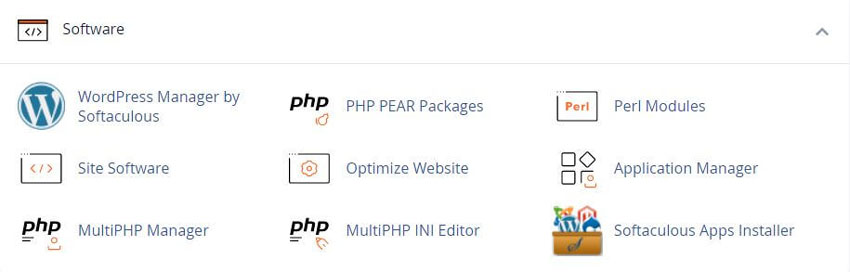
2. Select the Application
In Softaculous Select the application used to create your website from the left side window.
For example, WordPress is selected.
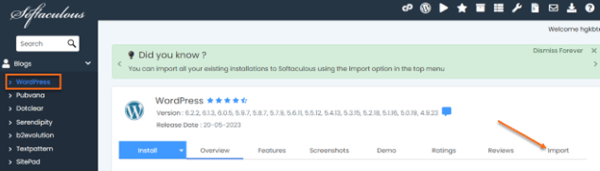
3. Open the Import Tab
Click on the Import tab on the right side
On the next screen you will see different options
- Choose Protocol: Select the protocol type that your website is using
- HTTPS: If your site has SSL
- HTTP: If your site doesn't have an SSL
- Choose Domain: Choose the domain where the software is currently installed.
- In Directory: Enter the directory where the software is installed. If you have installed the software in the public_html, you can leave the space blank. If the installation is in a subdirectory, enter the name of the directory where the software is installed.
After clicking on the Import icon, the software will be imported to Softaculous
You can now manage the upgrades, backups, staging etc for the installation.
Remote Import
For importing your installations from some other server to Softaculous using Remote Import
Select the Import Tab on the Software page in Softaculous End-user panel.
Then go to From Remote Server Tab on the Import page.
Fill in the Source Installation and details.
Source Details
Domain Name
This is the domain name from where the installation is to be imported from. Example : mydomain.com
Please Note : The domain name should not contain http:// or https://
Server Host (Optional)
This is an optional field. You can specify the server host if your domain name is not the same as your server host. Example : ftp.mydomain.com
Generally the server host is the same as domain name so you can leave this blank.
Protocol
Choose the protocol that you would like to use. This depends on what protocol is supported with your login details. Default is FTP
Port
This is the Port to use while connecting to the domain. The default port for FTP is 21
FTP Username
This is the username that you use to connect to your server. If you are using cPanel enter your cPanel username here.
FTP Password
This is the password for the FTP user that you provided above to connect to your server. If you are using cPanel enter your cPanel password here.
FTP Path
This is the relative path to web accessible directory of your domain i.e. the path after you login to your domain with the details you provided above.
Installation Directory (Optional)
This is the directory name where the installation to be imported is present. Example : wp856
Please Note : Keep this field blank if the installation is made in /public_html directory.
Destination Details
Choose Protocol
Choose the protocol that is supported by your server where the installation is to be imported.
Choose Domain
This is the domain name where the installation is to be imported to. Example : destinationdomain.com
In Directory (Optional)
Specify the directory name where you want the installation to be imported to. Example : wpdest
Please Note : Keep this field blank if you want your installation to be imported to /public_html directory.
Database Name
Specify the Database name where you want the database of the source installation to be imported to.
The import process will carry on in the background once you click on the Import button.
You will receive the Emails regarding the initiation of the import process and the final status of the same.
Frequently Asked Questions
Does WordPress Manager replace WordPress admin?
No. WordPress Manager exposes selected management actions from the hosting panel, while WordPress admin remains the application’s primary control area. See the WordPress Manager by Softaculous guide for the panel-side tools. The available Softaculous controls vary by installation and server configuration. Use the manager for the actions it explicitly provides and use the WordPress tutorial index for settings or workflows it does not expose.
Why is my WordPress site not listed?
Softaculous must recognize the installation before WordPress Manager can manage it. Check the domain and directory, confirm that the files and database are present, and use this import workflow when appropriate. After import, confirm the record in the All Installations list. Do not register a second installation blindly, because duplicate records can make later updates or backups harder to identify.
Can every user manage WordPress installations?
No. Access depends on the cPanel account, server policy, and the permissions required by the particular operation. Inside WordPress, Administrator-level capabilities may be needed for users, plugins, themes, or settings. If an option is missing, check the account role and server configuration rather than assuming the feature is broken. Related Softaculous tasks are listed in the Softaculous tutorial index.
Should I back up before updating?
Yes, especially before a core, plugin, theme, or configuration change that can affect a live site. A backup gives you a recovery point, but it should be stored where you can access it and tested for restoration when practical. Use the Softaculous backup guide first, then use staging for larger changes when the installation supports it.
What if a plugin or theme update causes an error?
First review the task result and determine whether the update completed. If the site is unavailable, preserve the current state and use a verified recovery plan rather than repeating the update. Restore from a known copy with the restore a backup guide when needed. Check the developer’s compatibility notes, PHP and WordPress requirements, and error logs, then contact the hosting provider or developer if the cause remains unclear.
Are Manage Sets automatically safe?
No. A set applies a selected collection, but plugins and themes can conflict with one another, require licenses, or stop receiving maintenance. Test the set on a nonproduction installation, confirm each item’s source and license, and review the result after installation. Keep the set current as the underlying software changes. See Manage WordPress Sets before applying a bundle.
Why do theme options differ?
WordPress interfaces depend on the active theme and editor model. Block themes can expose Site Editor controls, while classic themes may use the Customizer, menus, and widgets. Softaculous or WordPress Manager cannot make theme-specific controls universal. Follow the theme developer’s current documentation for the interface shown on your site, and review Install Theme in Softaculous if the theme was added through Softaculous.
How can I confirm a manager action worked?
Return to the installation list or the relevant WordPress screen and check the reported version, setting, plugin, theme, or user. Then test the public site and administration area. Background imports can be checked in the Softaculous task list. For changes that affect URLs, visibility, scheduled tasks, or debugging, verify those behaviors directly and record the previous setting before making another change.
Related Softaculous Tutorials and How To Guides
Wide range of key features for website management
Softaculous End-user Documentation
See our WHMCS cPanel Knowledgebase add-on module for Hosting Companies
Covering cPanel, WordPress, FTP and Softaculous
Related cPanel Tutorials and How To Guides
Tips and tricks on how to better optimize your cPanel
Tweet Share Pin Email
Add Comment
This policy contains information about your privacy. By posting, you are declaring that you understand this policy:
- Your name, rating, website address, town, country, state and comment will be publicly displayed if entered.
- Aside from the data entered into these form fields, other stored data about your comment will include:
- Your IP address (not displayed)
- The time/date of your submission (displayed)
- Your email address will not be shared. It is collected for only two reasons:
- Administrative purposes, should a need to contact you arise.
- To inform you of new comments, should you subscribe to receive notifications.
- A cookie may be set on your computer. This is used to remember your inputs. It will expire by itself.
This policy is subject to change at any time and without notice.
These terms and conditions contain rules about posting comments. By submitting a comment, you agree with these rules:
- Although the administrator will attempt to moderate comments, not all comments can be moderated at all times.
- You acknowledge that all comments express the opinions of the original author and not those of the administrator.
- You will not post material which is knowingly false, obscene, hateful, threatening, harassing or invasive of privacy.
- The administrator has the right to edit, move or remove any comment for any reason and without notice.
Failure to comply with these rules may result in being banned from submitting further comments.
These terms and conditions are subject to change at any time and without notice.
 Free Domain Names With All Hosting Accounts
 Index of Featured Blogs and Articles
 RSH Web Services: Where Excellence in Hosting Begins
 Key Features of Our Reliable and Affordable Hosting
Comments