
cPanel - Email - Mailing Lists
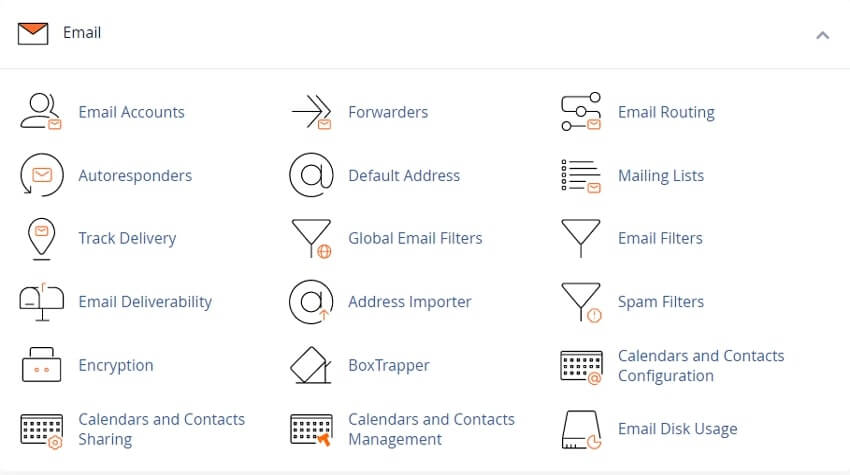
Mailing lists allow you to use a single address to send mail to multiple email addresses. cPanel handles mailing lists with the third-party Mailman application. For more information, read the Mailman documentation
Even with these settings enabled, the Mailman service will not start until the server hosts at least one mailing list.
Creating A Mailing List
The system includes an interface that allows you to define a name, password, and domain name for the mailing list.
To add a new mailing list, perform the following steps:
- • Enter the mailing list name in the List Name text box.
- • Select the domain for the mailing list from the Domain menu.
- • Enter and confirm the new password in the appropriate text boxes.
Select one of the following privacy options:
- • Private ━ Private archives exist for this mailing list. The administrator must approve subscriptions, and the Mailman interface does not display the mailing list.
- • Public ━ Public archives exist for this mailing list. The subscriptions are open and the Mailman interface displays the list.
- • Click on "Add Mailing List" to create the new mailing list.
After you create a mailing list, use the functions below to modify, delete, or change the password.
View The Current Mailing List
The Current Lists section of the interface displays the mailing lists on the account. To search for a mailing list, enter a keyword in the Search text box.
The following information describes the Current Lists table:
- • List Name ━ The mailing list’s full email address.
- • Usage ━ The amount of disk space that the mailing list uses.
- • Access ━ The user’s level of access to the mailing list.
- • Private ━ Private archives exist for this mailing list. The administrator must approve subscriptions, and the Mailman interface does not display the mailing list.
- • Public ━ Public archives exist for this mailing list. The subscriptions are open and the Mailman interface displays the list.
- • Admin ━ A row-delimited list of email addresses of the mailing list administrators.
- • Functions ━ Administrative functions for the mailing list (see below).
Managing The Mailing Lists
To manage a mailing list, perform the following steps:
- • In the Current Lists section of the interface, scroll to the name of the mailing list. Alternatively, enter a keyword in the Search box and click Go.
- • In the Functions column, click Manage next to the name of the mailing list.
After the Mailman management interface appears, you can define the various configuration options.
Enabling Spam Filters For The Mailing Lists
Mailman’s Spam Filters feature requires Spam Filters. To enable Apache SpamAssassin for your cPanel account, select Enable Apache SpamAssassin in cPanel’s Spam Filters interfacecPanel » Home » Mail » Spam Filters
To enable spam filters for a mailing list, perform the following steps:
- • In the Current Lists section, scroll to the name of the mailing list. Alternatively, enter a keyword in the Search box and click Go.
- • In the Functions column, click Manage next to the name of the mailing list.
- • In the Configuration Categories section at the top, click Privacy options.
- • Click on "Spam filters".
- • Enter the filter rules that you wish to apply. For more information, read cPanel's How to Create Mail Filter Rules For Mailing Lists documentation.
- • Click on "Submit Your Changes".
For more information on spam filters and features, read the Mailman documentation.
Changing The Password
You can use this interface to change the password for a mailing list without the old password. This is useful, for example, to recover control of your mailing list if you forget or lost the password.
To change the password for a mailing list, perform the following steps:
- • In the Current Lists section of the interface, scroll to the name of the mailing list. Alternatively, enter a keyword in the Search text box and click Go.
- • In the Functions column, click Change Password next to the name of the mailing list. A new interface will appear.
- • Enter and confirm the new password in the appropriate text boxes.
- • Or Click on "Password Generator" to generate a strong password.
- • Click on "Change Password" to activate the new password.
Delegating The Mailing List
You can delegate administrative rights on a mailing list to specified list members. Delegates can approve messages that await approval.
To manage the Delegation settings on a mailing list, click Delegation for that mailing list.
Delegate administrative rights to an additional user
To delegate administrative rights on a mailing list, perform the following steps:
- • Under Available Users, select the email addresses of the users to whom to delegate administrative rights.
- • Click on the right arrow.
- • Click on "Save".
Removing Admin Rights
To remove administrative rights from an address on a mailing list, perform the following steps:
- • Under List Administrators, select the email addresses of the users from whom to remove administrative rights.
- • Click on the left arrow.
- • Click on "Save".
Deleting A List
To delete a mailing list, perform the following steps:
- • In the Current Lists section of the interface, scroll to the name of the mailing list. Alternatively, enter a keyword into the Search box and click Go.
- • In the Functions column, click Delete next to the name in the list. A new interface will open.
- • Click on "Delete Mailing List to confirm.
Related cPanel Tutorials and How To Guides
A huge volume of features and customization that is available with cPanel
Tweet Share Pin Email
How do I use the Mailing Lists feature in cPanelAdd Comment
This policy contains information about your privacy. By posting, you are declaring that you understand this policy:
- Your name, rating, website address, town, country, state and comment will be publicly displayed if entered.
- Aside from the data entered into these form fields, other stored data about your comment will include:
- Your IP address (not displayed)
- The time/date of your submission (displayed)
- Your email address will not be shared. It is collected for only two reasons:
- Administrative purposes, should a need to contact you arise.
- To inform you of new comments, should you subscribe to receive notifications.
- A cookie may be set on your computer. This is used to remember your inputs. It will expire by itself.
This policy is subject to change at any time and without notice.
These terms and conditions contain rules about posting comments. By submitting a comment, you agree with these rules:
- Although the administrator will attempt to moderate comments, not all comments can be moderated at all times.
- You acknowledge that all comments express the opinions of the original author and not those of the administrator.
- You will not post material which is knowingly false, obscene, hateful, threatening, harassing or invasive of privacy.
- The administrator has the right to edit, move or remove any comment for any reason and without notice.
Failure to comply with these rules may result in being banned from submitting further comments.
These terms and conditions are subject to change at any time and without notice.
 What is ConfigServer Security and Firewall
 Effective DDoS Protection Strategies for Website Security
 What Are SSD Drives and Their Benefits for Website Hosting?
 Best Hosting Service and Free Domain Names
Comments