
cPanel - Email - Disk Usage
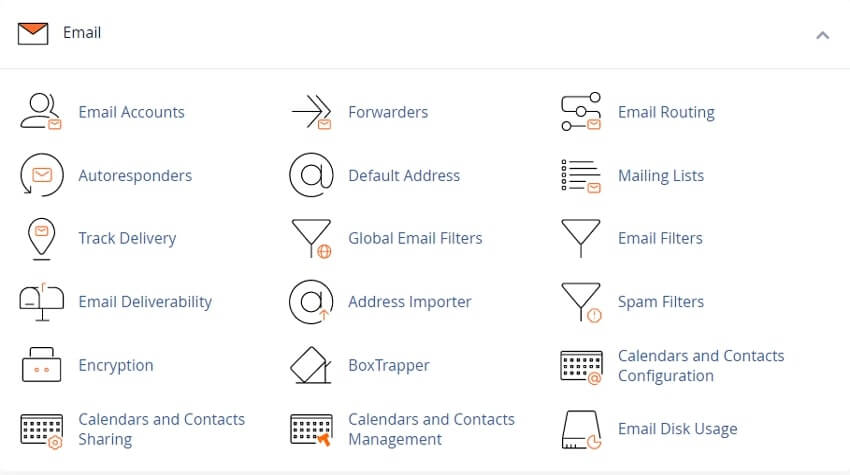
This feature allows you to view all of your mailboxes and remove old or large messages
Account
Select the account to modify from the Account menu.
Note: The Account menu only appears for cPanel accounts. It will not appear in Webmail accounts.
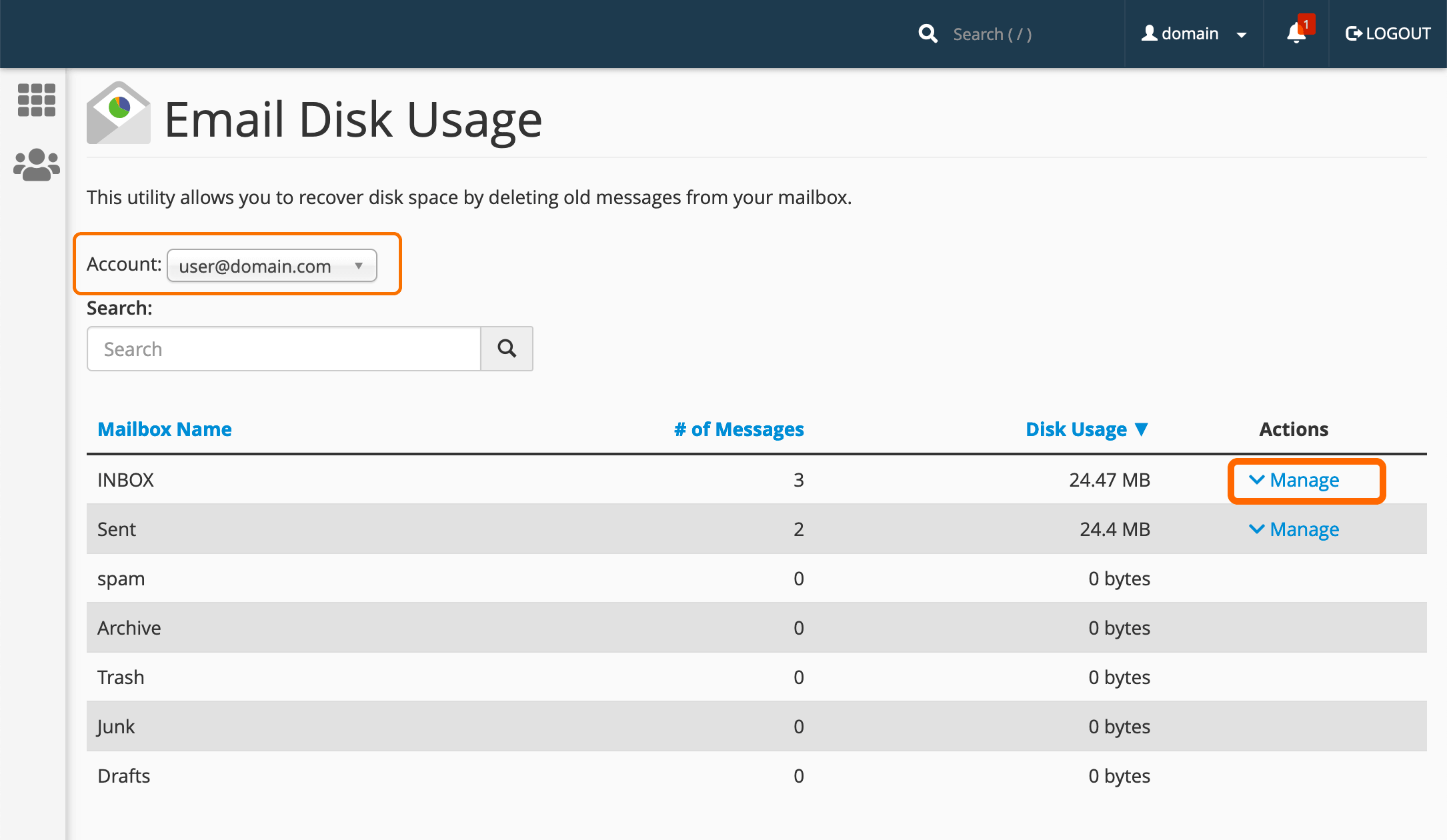
Search
Use the Search text box to search for specific mailbox names.
The mailboxes table
The mailbox table contains a list of mailboxes. You can sort this information by the name, number of messages, or disk usage.
Mailbox Name - The name of the mailbox.
# of Messages - The number of messages for the address or in the mailbox folder.
Disk Usage - The disk usage for each address or mailbox, in bytes, kilobytes (KB), megabytes (MB), or gigabytes (GB).
Remove messages
To remove messages, perform the following steps:
1) Click Manage.
Select one of the following removal options from the menu:
- • 1 year old or more
- • 30MB in size or more
- • Previously viewed
- • All messages
- • Custom query - This option allows you to customize your removal option with the Dovecot search query format.
For example, to remove all messages larger than 10MB, select this option and enter larger 10M in the text box.
For more information about how to use the Dovecot search query format, read Dovecot’s Search Query Format documentation.
Click - "Delete Permanently"
YouTube Video - cPanel Tutorials - Disk Usage
Watch our video about cPanel Hosting Services on YouTube
Related cPanel Tutorials and How To Guides
Manage, tweak, and increase the security and performance
Tweet Share Pin Email
Add Comment
This policy contains information about your privacy. By posting, you are declaring that you understand this policy:
- Your name, rating, website address, town, country, state and comment will be publicly displayed if entered.
- Aside from the data entered into these form fields, other stored data about your comment will include:
- Your IP address (not displayed)
- The time/date of your submission (displayed)
- Your email address will not be shared. It is collected for only two reasons:
- Administrative purposes, should a need to contact you arise.
- To inform you of new comments, should you subscribe to receive notifications.
- A cookie may be set on your computer. This is used to remember your inputs. It will expire by itself.
This policy is subject to change at any time and without notice.
These terms and conditions contain rules about posting comments. By submitting a comment, you agree with these rules:
- Although the administrator will attempt to moderate comments, not all comments can be moderated at all times.
- You acknowledge that all comments express the opinions of the original author and not those of the administrator.
- You will not post material which is knowingly false, obscene, hateful, threatening, harassing or invasive of privacy.
- The administrator has the right to edit, move or remove any comment for any reason and without notice.
Failure to comply with these rules may result in being banned from submitting further comments.
These terms and conditions are subject to change at any time and without notice.
 How Encryption Works
 Firewalls Explained
 How VPNs Work
 What Is JavaScript
Comments