
cPanel - Security - Leech Protection
The Leech Protection feature allows you to detect unusual levels of activity in password-restricted directories on your website
After you set the maximum number of logins within a two-hour period, the system redirects or suspends users who exceed that maximum.
Enable leech protection
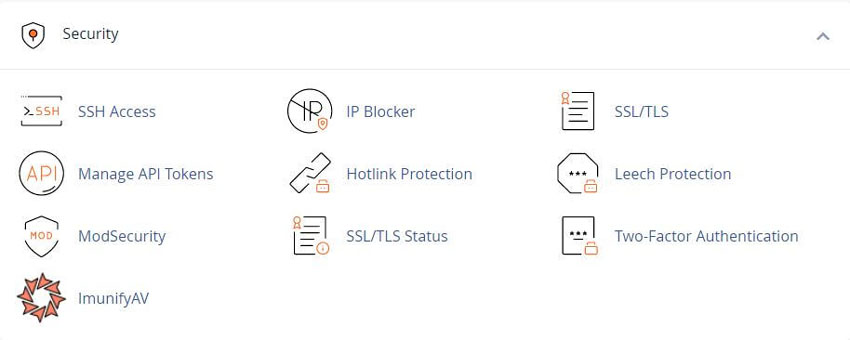
To enable Leech Protect for a directory, perform the following steps:
1)The Leech Protect window will appear. Select which of the four main directories you wish to view in the file window:
- • Home Directory
/home/user - • Web Root
/public_html/www - • Public FTP Root
/public_ftp - • Document Root
/public_html
2) Select the directory that you wish to protect.
- • Click the appropriate folder icon () to navigate to a different folder
- • Click the desired folder's name to select it
3) Enter the maximum number of logins that you wish to allow each user within a two-hour period.
4) To redirect users who exceed the maximum number of logins within a two-hour period, enter a URL to which you wish to redirect them.
5) To configure the system to send an email alert when Leech Protect activates, select the Send Email Alert To checkbox and enter the email address to alert.
6) To disable an account that exceeds the maximum number of logins within a two-hour period, select the Disable Compromised Accounts checkbox.
7) Click Enable.
Disable leech protection
To disable leech protection, perform the following steps:
1)The Leech Protect window will appear. Select which of the four main directories you wish to view in the file window:
- • Home Directory
/home/user - • Web Root
/public_html/www - • Public FTP Root
/public_ftp - • Document Root
/public_html
2) Select the directory that you wish to protect.
3) Click the appropriate folder icon () to navigate to a different folder.
4) Click the desired folder's name to select it.
5) Click Disable.
Manage users
To add, edit, and delete users, click Manage Users to navigate to cPanel's Password Protect Directories interface
Home >> Security >> Password Protect Directories
See our WHMCS cPanel Pre-Made Articles. Enhance User Support Efficiency
YouTube Video - Manage Password and Leech Protection
cPanel Learning Resources and How-To Instructions
Industry leading Linux-based website hosting control panel
Tweet Share Pin Email
Add Comment
This policy contains information about your privacy. By posting, you are declaring that you understand this policy:
- Your name, rating, website address, town, country, state and comment will be publicly displayed if entered.
- Aside from the data entered into these form fields, other stored data about your comment will include:
- Your IP address (not displayed)
- The time/date of your submission (displayed)
- Your email address will not be shared. It is collected for only two reasons:
- Administrative purposes, should a need to contact you arise.
- To inform you of new comments, should you subscribe to receive notifications.
- A cookie may be set on your computer. This is used to remember your inputs. It will expire by itself.
This policy is subject to change at any time and without notice.
These terms and conditions contain rules about posting comments. By submitting a comment, you agree with these rules:
- Although the administrator will attempt to moderate comments, not all comments can be moderated at all times.
- You acknowledge that all comments express the opinions of the original author and not those of the administrator.
- You will not post material which is knowingly false, obscene, hateful, threatening, harassing or invasive of privacy.
- The administrator has the right to edit, move or remove any comment for any reason and without notice.
Failure to comply with these rules may result in being banned from submitting further comments.
These terms and conditions are subject to change at any time and without notice.
 How to Keep Your Website Safe from Cyber Threats
 How to Fix SSL or HTTPS Warnings
 Why Is Website Security Important?
 HTTP vs HTTPS: Understanding the Key Differences
Comments