
Designing Tips and Strategies
It has never been more important to have a great-looking website. However, with so many website building tools enabling anyone to make a website. Even with little to no technical skills. It is getting more and more difficult to make your website stand out.
For designers, the stakes are even higher because an exceptional looking website is not just "Nice to Have" It is mandatory today. After all, if you are not able to do a great job with your website, why would clients expect you to do any better for them?

Technical Website Audit
A technical audit is a set of tests to check the site for various errors. These tests allows you to identify errors that negatively affect the functional operation of your website They and can also effect the ranking in search engines.
Validate your HTML, XHTML etc.
This validator checks the markup validity of HTML and your web documents.
Checking for Duplicates Pages
Identifying duplicate content issues is a crucial part of any audit.
404 Error - Not Found Pages
Check for broken links that can damaging your website's rankings and usability.
Image ALT attribute Check
Alternate Image Text or Alt Text is descriptive text that is displayed in place of an image if it can not be loaded.
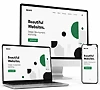
Mobile Friendly or Responsive Design
Test how easily a visitor can use your page on a mobile device.
User Accessibility
Check your website against accessibility standards to make their web content more accessible to individuals with disabilities.
Check XML Sitemap Status
The XML sitemap serves as a map for Google and other search engine crawlers. It essentially helps the crawlers find all your web pages.
Include Well-Designed and Written Headings
Your headings and content should be driven by what your potential customers are looking for. Keywords in your title is also important for targeting your message and attracting the right audience. One good in depth keyword research tool is SEMScoop. Search Engines typically give headings more weight over other content, so choosing the right heading and making it stand out can significantly improve your search ability. But more importantly, Headings will guide your user through the site, making it easy to scan through and find content that speaks to them directly.
Page Speed
One of the most frustrating experiences for users of the web is waiting for a page to load for too long. With the rise of the mobile devices, people are accessing content all over the world on different platforms. People have come to expect fast results for any website that they visit. When they do not get it, they usually bounce. Slow page loading time can be a source of frustration, and often users simply do not have the time to wait. A 2-second delay in load time during a visit results in abandonment rates of up to 87%
Take a look at our Website Tune Up from RSH Web Services. May just be what your website needs.
Use White Space
On more than one occasion, I have heard clients complain that there was too much white space on their site and that this unused real estate ought to be used for advertising more of their services. However, white space is essential to good design. White space makes your content more legible, while also enabling the user to focus on the elements surrounding the text. According to Crazy Egg, white space around text and titles increases user attention by 20%. White space can also make your website feel open, fresh and modern and if your branding is consistent with these then it can help you communicate that feeling to the user. One downside of white space to keep in mind, however, is that it does indeed take up space.
Use Hyper Link Differentiation
When you add a link to any page, you are saying you want the user to click there. Make sure links are easily identifiable by visual cues. Underlined text, and different colored text, draws the attention of the reader and lets him know that this is a link. Most regular website users sees Blue and underlined text as links and knows to click on them. Exploiting user expectations and what they already know about using the web is tantamount to success. When it comes to Hyperlink differentiation, you do not need to reinvent the wheel. Sticking to convention can be your best ally here. A simple way to test how effective your links are is to blur and remove the color from the design and see what stands out. When hyper linking, also stop to think about the length of the hyperlink. The longer the links, the easier it is to identify it as a hyperlink.

Use Bullets, Bullets and more Bullets
Bullets will enable the user to quickly get all the information they want: benefits, ways you solve their problem, and key features of a product or service, all in a short amount of time. This will make your propositions more attractive and will enable the user to get all the information they need. Additionally, you do not have to go the traditional route with a simple circle. With tons of cool icons out there, you can also get creative with your bullet and help the reader further with images that represent your point. This is also useful because it will force you to isolate the most important points you are trying to make without getting caught up in terminology or specifics.
Using Images
Using images wisely
People across the Internet are getting smarter and faster at judging company websites. When they first visit your site, they are easily able to pick out a generic stock photo that they have already seen elsewhere or that resembles a non-personal style. Using some types of stock photography can decrease trust and also stand out as generic and non-unique. Unfortunately, these associations carry over to your business as well. In a case study, they were able to increase conversion on a page by simply replacing a stock photo with an image of the actual employees.

Use a "@YourDomainName" Email Address
For people to take your business seriously
You need to show that you take it seriously as well.
No matter how great your website looks, something will feel off if your clients are receiving emails that do not match your Website's domain name. Give your website more credibility by extending your branding and getting a you@yourdomain email address. Plus, you can even make your business seem bigger than it really is by registering multiple email addresses like
info@YourDomainName.
support@YourDomainName
press@YourDomainName
Keep Your Website Consistent
Consistency means making everything match. Heading sizes, font choices, coloring, button styles, spacing, design elements, illustration styles, photo choices, etc. Everything should be themed to make your design coherent between pages. In order to provide your user with a beautiful experience as they navigate through your site, it is important that they know they are still in your website. Drastic design changes from one page to the other can lead your user to feel lost and confused and to lose trust in your site. “Am I in the right place?” This is a question I often find myself asking when navigating through inconsistent sites. And when I do, I usually end up leaving. Inconsistencies in design lower the quality of the products and services you are providing in the viewer’s eyes.
Do You Really Need All Those Widgets?
When you are first building your website, it is easy to get carried away with widgets. You may be thinking - I can show my Tweets and everyone who Likes my page on Facebook and even Reddit, plus a Google Street View map.
Take a good look at these widgets and ask yourself if they are serving any real purpose. Only tweet once a month? Only have 18 likes on Facebook? How important is your location for visitors to know? Might be time to take these off of your site then. Let us not forget about mobile. If these widgets take a long time to load on smartphones, or worst may not even work, then it is definitely time for them to go.
Shorten or Delete Some Copy
As much as I would love to believe that you are on the edge of your seat reading every single word of this article. The reality is that we all skim website content. This is one thing for a blog post, but is a more serious challenge for a homepage or other main section of your site. This is your best chance to sell people on your product or service, which is why you need to make every word count. If your website has paragraph after paragraph of copy, it is time to start editing. Read over your copy and ask whether each sentence needs to be there. Are two sentences essentially saying the same thing? Combine them. Do neither of them add anything important? Delete both of them. Shortening your copy gives you better odds that your main messages will be communicated and that your site looks less intimidating to visitors wanting to learn more about you.
Switch Up the Calls-To-Action
Calls-To-Action (CTAs). These are the main links (often a button) that are intended to encourage a reader to move onto whatever you have defined as the next step. This could be scheduling a meeting, reading more about a piece from your portfolio, signing up for your newsletter, or anything else that will help drive engagement with your audience. Typically, CTAs are something generic like Buy Now or Learn More. Those are descriptive, but overall they are just average. There is so much room here to have fun, and too few of us take advantage. Just by switching to something more casual like Sign Me Up or Teach Me could go a long way.

Improve SEO
Search engines are very important for attracting new visitors to your website, but only if you are able to rank highly in search results. To have the best chances possible, you will have to do some search engine optimization (SEO). There are books, blogs and entire courses dedicated to SEO. It is beyond the scope of one section of a blog post. But one basic SEO improvement you can make is to look at each page on your site and decide what the target keyword(s) of each page are. This is what you think most people will type into Google that your page provides an answer to.
If your site is built with WordPress, there are many SEO plugins that are very helpful for optimizing your website.
We have also devoted a whole section just to SEO
- SEO Ranking Factors
- Blogs For SEO Marketing
- Creating Quality Content
- URL Structure for SEO
- SEO Tips and Tricks
- Better SEO Ranking with SSL
- SEO For Beginners
- SEO or SMO
- Local Business Online Marketing
- Google Analytics for Beginners
- Social Media Marketing Mistakes
Add ALT Tags to Images
Another boost you can give your website is adding ALT tags to your images. This is the text that will show up if for whatever reason a visitor is unable to load your images. There are two benefits to this: Your visitors won’t miss out on important information if they are unable to load an image. You will give Google additional content to crawl and increase your odds of ranking higher in search results. This is particularly good for Google Image results, where your awesome imagery will have another platform to be discovered on.
Replace Low-Resolution Images
Low-resolution imagery is something any website should avoid, but this is especially true for designing type websites. Take a look at your site on different devices and screen sizes; if any of your imagery doesn’t appear crisp and high-res, swap it out for something new.
Change your Color Scheme
Much like your home, a fresh coat of paint can breathe new life into your website. Switch up your Website's color scheme to give both you and your visitors a new way to look at your site. Who knows, seeing your site in a new light may even give you inspiration for other ways to make improvements as well.
Catch Your 404 Errors Pages
While search engines do not punish you severely for soft 404 errors (page not found), a user will! When a user approaches a link or an image, they are expecting this link will take them to the next place they want to go. Encountering a 404 will make your user annoyed and have them re-think spending their time on your website (when they probably could go elsewhere for a faster solution). Next to slow page loading time, running into 404s another highly frustrating event for a user, and it completely disrupts their journey throughout your website.
Best Practices for Improving Your Website
Improving a website is an ongoing process that combines good design, useful content, technical performance, accessibility, and search optimization. The best results come from making changes that help real visitors while also giving Google, AI search engines, and answer engines a clear understanding of each page's purpose.
- • Give every page one clear purpose. Each page should focus on a primary topic, question, service, or visitor need. Use descriptive page titles, headings, introductory text, and supporting content that consistently reinforce that subject. Avoid trying to rank one page for too many unrelated keywords. For additional guidance, review these SEO tips and optimization techniques.
- • Use a logical heading structure. Keep one primary H1 that clearly identifies the page topic, followed by descriptive H2 and H3 headings that organize related ideas. Meaningful headings help visitors scan the page while giving search engines and AI systems stronger clues about the relationships between different sections of your content.
- • Write for search intent instead of keywords alone. Determine what a visitor actually wants to accomplish when searching for your topic, then answer that need directly. Include important keywords and related terminology naturally rather than repeatedly forcing the same phrase into the content. Learn more about SEO ranking factors that can influence search visibility.
- • Provide direct answers near relevant headings. When a section addresses a common question, definition, problem, or decision, answer it within the first few sentences. This question-and-answer-friendly structure makes information easier for Google snippets, AI Overviews, search assistants, and other answer engines to identify and summarize.
- • Create original, information-rich content. Add useful explanations, examples, recommendations, comparisons, and practical details rather than publishing thin or repetitive text. Clearly written quality website content gives both visitors and AI systems more meaningful information to evaluate and reference.
- • Keep facts clear and specific. Avoid vague statements when a more precise explanation is available. Clearly identify products, technologies, features, organizations, and concepts instead of relying heavily on phrases such as "it," "this," or "they." Strong semantic clarity helps large language models understand entities and the relationships between them.
- • Strengthen contextual internal linking. Link related words and concepts to useful supporting pages rather than using generic anchor text such as "click here." Relevant internal links help visitors discover additional information while giving search engines a clearer picture of your site's topical structure. Browse the RSH Web Services blog and resource library for additional topics that can support natural internal linking.
- • Keep URLs simple and descriptive. Use readable URLs that communicate the subject of a page without unnecessary parameters, excessive words, or confusing directory structures. Consistent URL organization can improve usability, crawling, and content classification. See the guide to SEO-friendly URL structure for additional recommendations.
- • Optimize titles and meta descriptions. Give important pages unique title tags that clearly describe their primary subject and write compelling meta descriptions that accurately summarize what visitors will find. Metadata should support the visible page content rather than making claims that the page does not answer.
- • Make important information easy to extract. Use short paragraphs, descriptive headings, lists, definitions, and clearly stated conclusions when appropriate. Well-organized information is easier for visitors to understand and easier for search engines, LLMs, and generative search systems to identify as a potential answer to a query.
- • Improve website speed and mobile usability. Compress appropriately sized images, remove unnecessary scripts and widgets, reduce page weight, and test important pages on phones, tablets, and desktops. Faster, responsive pages provide a better user experience and make it easier for visitors to reach the information they need.
- • Maintain clear entity and brand information. Use consistent names for your business, services, products, authors, and important subjects throughout the website. Consistent terminology and supporting structured data can help search engines and generative AI systems understand who created the content and what each page represents.
- • Update and maintain existing content. Periodically review important pages for outdated information, broken links, obsolete recommendations, missing images, and opportunities to provide better answers. Updating useful existing pages can often provide more value than continually creating new pages covering similar topics.
- • Optimize for people first. SEO, AEO, GEO, and LLM optimization work best when the underlying page genuinely solves a visitor's problem. Clear navigation, trustworthy information, useful internal resources, accessible design, fast performance, and straightforward answers create a stronger website for both human visitors and modern search technologies.
 Frequently Asked Questions
What are the first things I should improve on an existing website?
Start with the areas that directly affect visitors: navigation, page speed, mobile usability, readability, calls-to-action, and outdated content. Remove unnecessary elements that distract from the page's purpose and make important information easier to find. A broader review of website design and improvement guides can help identify additional opportunities.
How do I know if my website has too much content?
Content becomes excessive when visitors must work through long, repetitive paragraphs to find the information they need. Keep important explanations, benefits, instructions, and supporting details while removing duplication and unnecessary wording. Breaking longer material into descriptive headings, short paragraphs, and lists can improve readability. These quality content guidelines provide additional ideas for creating useful, focused pages.
Should I remove widgets and third-party tools from my website?
Keep a widget or third-party tool only when it provides clear value to visitors. Social feeds, maps, chat tools, counters, and embedded scripts can add functionality, but they may also increase loading time or create compatibility problems. Test each feature on desktop and mobile devices and remove anything that is outdated, unused, distracting, or noticeably slowing the page.
When is improving my current website better than doing a complete redesign?
Incremental improvements can be the better choice when the website already has a sound structure, works well on mobile devices, and mainly needs updated content, improved navigation, faster pages, or stronger calls-to-action. A complete website redesign becomes more practical when the design, technology, usability, or structure is significantly outdated.
How can I make a website easier to use on phones and tablets?
Use responsive layouts that automatically adapt to different screen sizes, keep navigation simple, make buttons easy to tap, use readable font sizes, and avoid elements that extend beyond the screen. Images should resize correctly and unnecessary scripts should not interfere with mobile performance. Testing several devices and browsers is an important part of creating a modern responsive website.
How can I improve website speed without changing the entire design?
Begin by reducing oversized images, unnecessary widgets, unused scripts, excessive plugins, and other resources that add page weight. Browser caching and efficient hosting can also improve loading performance. Test important pages individually because one page may contain heavier content than another. Regular website maintenance can help uncover slow pages, broken elements, and outdated components.
How should calls-to-action be used on a business website?
Calls-to-action should clearly tell visitors what useful step they can take next, such as requesting information, viewing a service, contacting the business, downloading a resource, or completing a purchase. Position them where they naturally follow relevant information and use wording that explains the action. Avoid filling every section with competing buttons because too many choices can make the desired path less obvious.
How often should I review and update my website?
Review important pages regularly and whenever your products, services, prices, business information, software, or customer needs change. Check for outdated content, broken links, missing images, malfunctioning forms, slow pages, and obsolete third-party tools. Older websites may eventually require a larger update, and this website redesign strategy explains several signs that broader changes may be needed.
What should I check before publishing major website changes?
Test navigation, links, forms, images, headings, contact information, calls-to-action, and page layouts before publishing. Review the website on phones, tablets, and desktop browsers and confirm that important pages load correctly without errors. If you are planning a larger project, this website design guide covers many of the fundamental elements worth reviewing before launch.
Summary
Transform your website into a user-friendly, visually appealing platform with expert design improvements. From strategic layout adjustments to optimizing functionality, you can create an engaging online experience. Enhance usability by refining navigation, improving content flow, and ensuring mobile responsiveness.
Boost performance by streamlining load times and incorporating SEO best practices. Whether you're aiming for a fresh look or better user engagement, these practical design upgrades will elevate your website’s effectiveness and drive results, giving your online presence the makeover it truly deserves.
Author Bio: Thomas Vermeer
A prolific writer and business thinker with a passion for managing digital content. With experience in creating engaging and informative articles for...
If you would like some help getting your website online and establishing your presence on the Internet, RSH Web Services is here to help design and build a great website for you.
Add Comment
This policy contains information about your privacy. By posting, you are declaring that you understand this policy:
- Your name, rating, website address, town, country, state and comment will be publicly displayed if entered.
- Aside from the data entered into these form fields, other stored data about your comment will include:
- Your IP address (not displayed)
- The time/date of your submission (displayed)
- Your email address will not be shared. It is collected for only two reasons:
- Administrative purposes, should a need to contact you arise.
- To inform you of new comments, should you subscribe to receive notifications.
- A cookie may be set on your computer. This is used to remember your inputs. It will expire by itself.
This policy is subject to change at any time and without notice.
These terms and conditions contain rules about posting comments. By submitting a comment, you agree with these rules:
- Although the administrator will attempt to moderate comments, not all comments can be moderated at all times.
- You acknowledge that all comments express the opinions of the original author and not those of the administrator.
- You will not post material which is knowingly false, obscene, hateful, threatening, harassing or invasive of privacy.
- The administrator has the right to edit, move or remove any comment for any reason and without notice.
Failure to comply with these rules may result in being banned from submitting further comments.
These terms and conditions are subject to change at any time and without notice.
Tweet Share Pin Email
Created by our professional copywriting team
 Computer Hardware Explained
 Understanding 5G
 How Bluetooth Works
 Bootstrap5 Resources
We provide our customers with high quality and 100% guaranteed hosting services
Comments